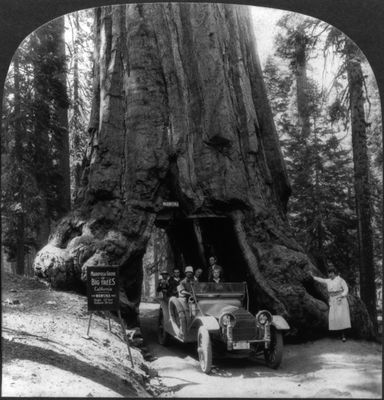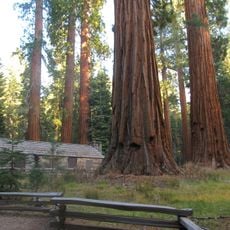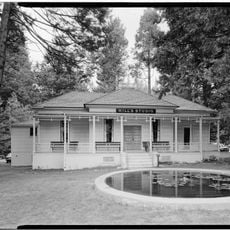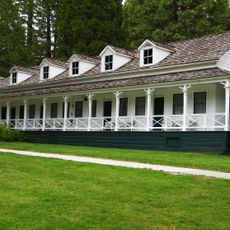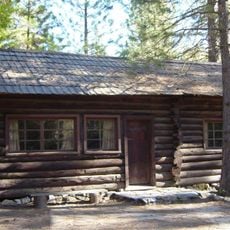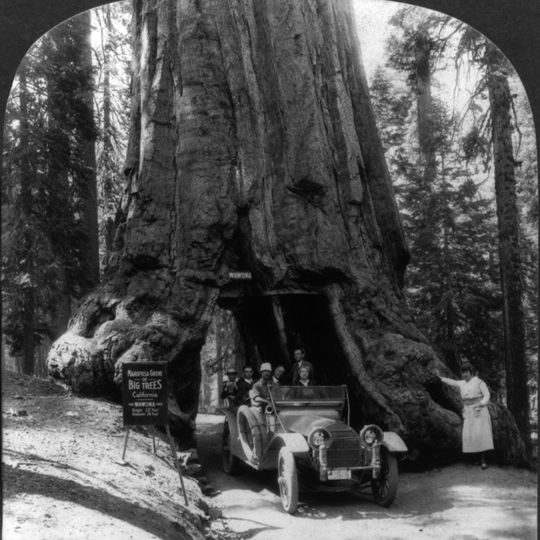
Wawona Tree, Sequoia in Mariposa Grove, California, US.
The Wawona Tree was a giant sequoia in Mariposa Grove, Yosemite National Park, 69 m tall and 7.9 m across at the base. In 1881 a tunnel 2.1 m wide, 2.7 m high and 7.9 m long was cut through its base, enlarging an old fire scar. It fell in February 1969 and lies where it dropped, now called the Fallen Tunnel Tree.
A tunnel was cut through the trunk in 1881, widening an existing fire scar, by the Scribner brothers, who were paid $75; the Yosemite Stage and Turnpike Company created it as a tourist attraction. After the National Park Service was founded in 1916, Stephen Mather and Horace Albright promoted drive-through attractions like this one to build automobile tourism. The tree fell in February 1969 under a heavy snow load on its crown, and it remains where it fell, now called the Fallen Tunnel Tree.
The name Wawona is of unknown origin; a popular but unproven story says it was the Miwok word for "big tree" or "hoot of the owl". The tree was a commercial attraction: the Yosemite Stage and Turnpike Company cut the tunnel in 1881, and visitors were photographed driving through or standing inside it. Pacific Life adopted the tree as its trademark in the early 1900s, and in 1956 sculptor Spero Anargyros carved it in the company's San Francisco foyer.
Visitors reach the tree through Mariposa Grove Welcome Plaza, where shuttle services run during high-traffic months from spring through fall. The walking trail through the forest works for hikers of all levels and provides access to several other notable sequoias.
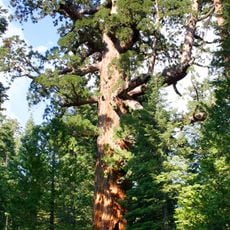
The tree's thick, spongy bark can grow up to 60 centimeters (24 inches) deep and protects the wood effectively from wildfires. This adaptation allows the sequoia to survive fires that would kill most other tree species.
The community of curious travelers
AroundUs brings together thousands of curated places, local tips, and hidden gems, enriched daily by 93,166 contributors worldwide.