El Capitan

Log in to your account

AroundUs is a community-driven map of interesting places, built by curious explorers like you. It grows with every review, story, and photo you share.
Connect to save your favorite spots, contribute locations, and create personalized routes.
By continuing, you accept our Terms and Conditions and our Privacy Policy
Add to collection
Map
Suggest a change
Share

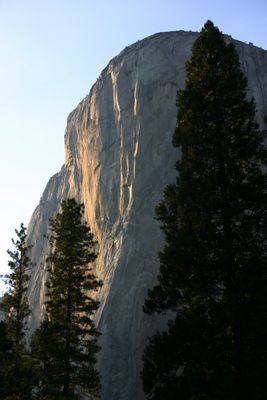
El Capitan, Granite mountain in Yosemite National Park, United States

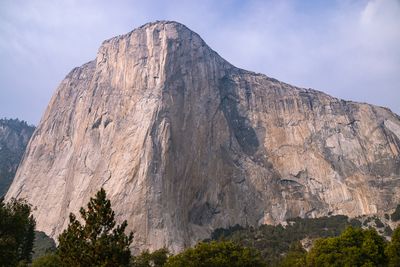
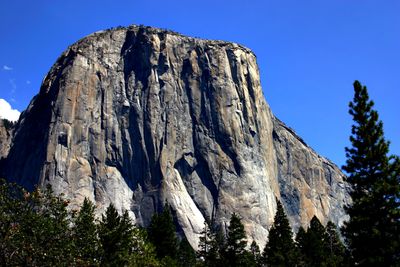
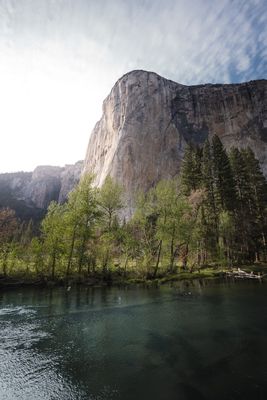
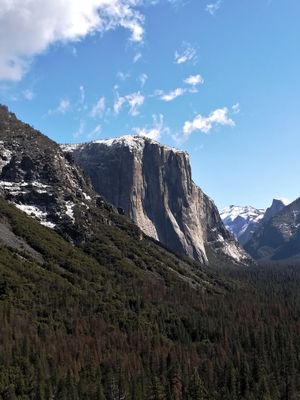
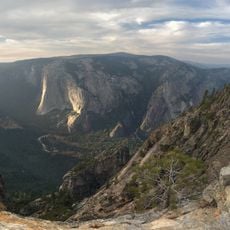
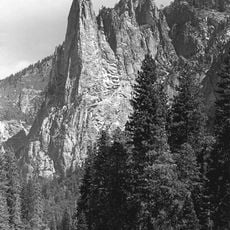
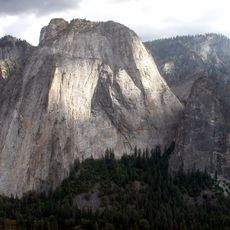
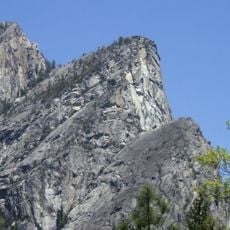
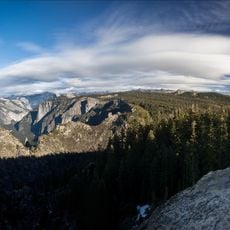
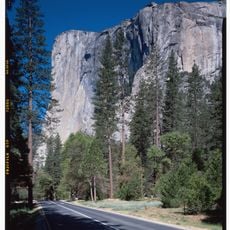
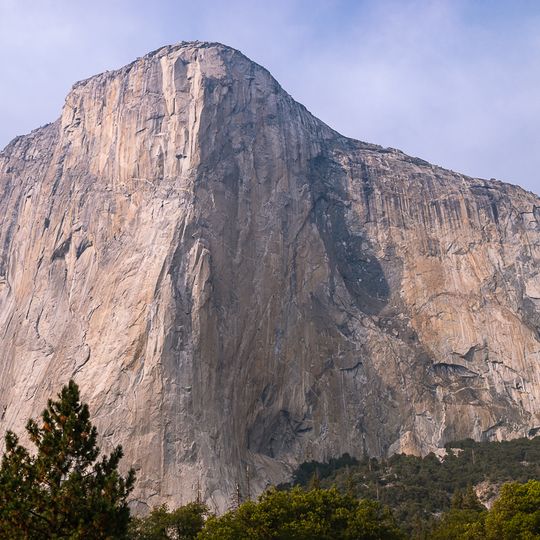
El Capitan is a granite wall in Yosemite National Park that rises roughly 914 meters (3,000 feet) above the valley floor. The face extends more than a kilometer in width and presents a nearly vertical surface with cracks, edges, and smooth sections of polished granite.

The Ahwahneechee people called this formation Tutokanula, meaning Rock Chief, long before Spanish explorers translated the name to El Capitan in the 19th century. The first complete ascent of the Nose route took place in 1958, marking the beginning of modern bigwall climbing.

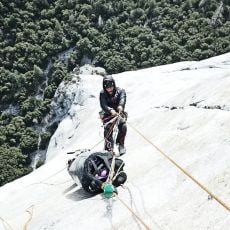
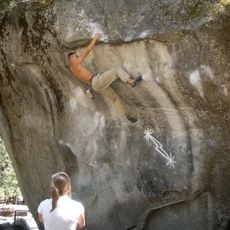
Climbing teams from around the world gather here to test themselves on the vertical walls, and their tents at the base form a temporary community of adventurers. You often see spectators with binoculars tracking the tiny figures on the rock face from the valley floor, commenting on their progress.

The hike to the summit takes a full day and requires an early morning start, as the ascent is long and steep. The best time to visit is between spring and fall when trails are free of snow and temperatures remain comfortable.

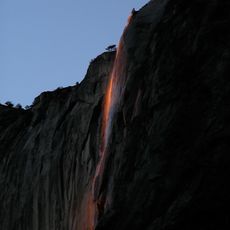
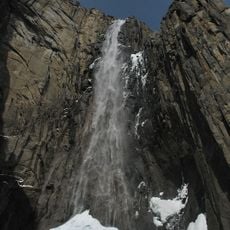
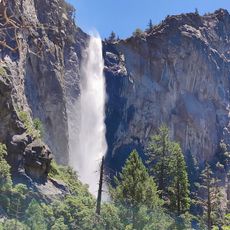
During certain February evenings, Horsetail Fall on the eastern side appears like a glowing fire cascade when sunset light turns the waterfall orange-red. This natural display lasts only a few minutes and depends on perfect conditions like sufficient meltwater and a clear sky.

Location: Mariposa County

Elevation above the sea: 2,307 m

Made from material: granite

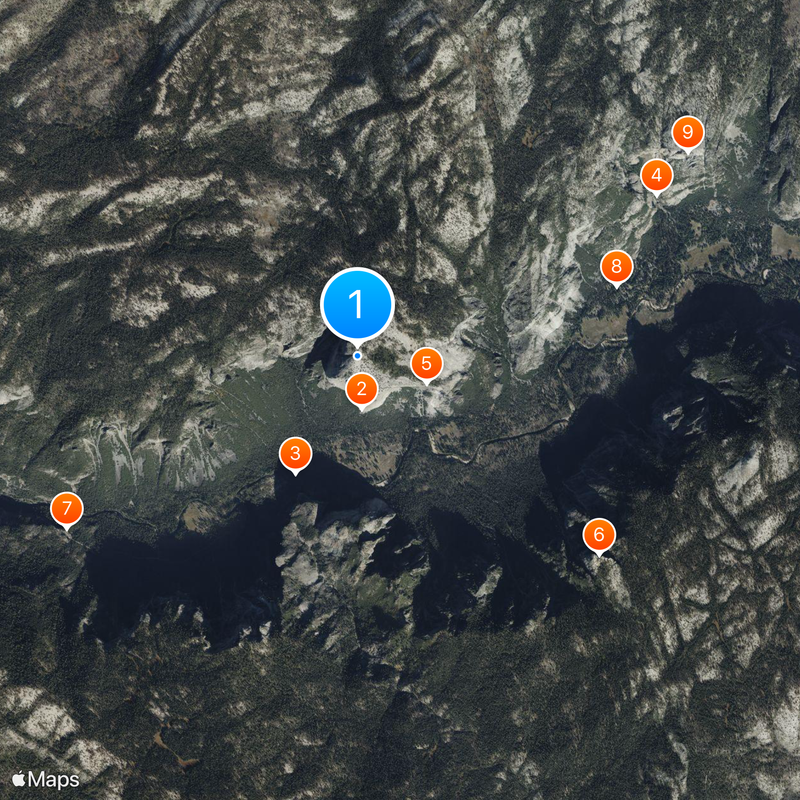
GPS coordinates: 37.73422,-119.63761

Latest update: December 2, 2025 22:35

Coastal and mountain cliffs worldwide

Cliffs rank among Earth's most striking geological formations, ranging from coastal precipices to inland mountain faces. Along oceans, they shape coastlines for thousands of miles, while in mountain regions they form vertical walls that draw climbers from around the world. This collection documents significant cliffs across six continents, including Ireland's 214-meter (702-foot) Cliffs of Moher, England's white chalk cliffs at Dover, and Norway's Preikestolen, which rises 604 meters (1,982 feet) above Lysefjord. Among the locations are some of Earth's highest vertical walls. Hawaii's Kalaupapa Cliffs on Molokai reach 1,010 meters (3,315 feet), while Pakistan's Trango Towers rise above 6,000 meters (19,685 feet) with nearly vertical rock faces. Coastal formations like Normandy's Étretat cliffs, Ireland's Slieve League, and Australia's Bunda Cliffs along the Nullarbor Plain demonstrate the power of marine erosion. Inland, formations such as California's El Capitan, China's Zhangjiajie National Forest Park towers, and South Africa's Table Mountain create distinctive landscape features shaped by different geological processes over millions of years.

Notable rock formations worldwide

Geological formations develop over millions of years through natural processes including erosion, weathering, and tectonic activity. These rocks and stone structures take various forms – arches, monoliths, spheres, and pillars – shaped by wind, water, and time. They document Earth's geological history and provide insight into the forces that have sculpted our planet. From the red sandstone formations of the Australian outback to the granite arches of Central Europe, these sites demonstrate the diversity of geological processes across different climates and landscapes. The collection includes locations such as Uluru in Australia's Northern Territory, a 1,142-foot (348-meter) sandstone monolith of cultural significance to the Anangu people. In Rogaland, Norway, Kjeragbolten is a boulder wedged between two cliff faces. Pravčická Brána in the Czech Republic's Ústí nad Labem region is Europe's largest natural sandstone arch with a span of 85 feet (26 meters). Other examples include the Moeraki Boulders in New Zealand, nearly spherical stones along the beach, and El Capitan in California, a 2,900-foot (900-meter) granite wall. These formations serve both geological research and as destinations for travelers interested in exploring natural landforms.

Reviews

Visited this place? Tap the stars to rate it and share your experience / photos with the community! Try now! You can cancel it anytime.

« El Capitan - Granite mountain in Yosemite National Park, United States » is provided by Around Us (aroundus.com). Images and texts are derived from Wikimedia project under a Creative Commons license. You are allowed to copy, distribute, and modify copies of this page, under the conditions set by the license, as long as this note is clearly visible.

Discover hidden gems everywhere you go!

From secret cafés to breathtaking viewpoints, skip the crowded tourist spots and find places that match your style. Our app makes it easy with voice search, smart filtering, route optimization, and insider tips from travelers worldwide. Download now for the complete mobile experience.

Around Us App Screenshot

A unique approach to discovering new places

Le Figaro

All the places worth exploring

France Info

A tailor-made excursion in just a few clicks

20 Minutes