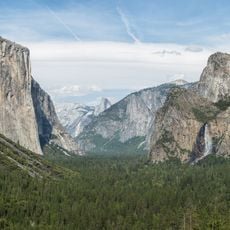
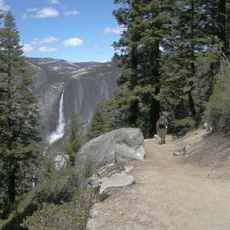
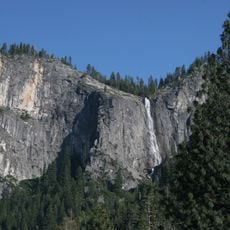
Ribbon Fall, Seasonal waterfall at Yosemite National Park, California, US.
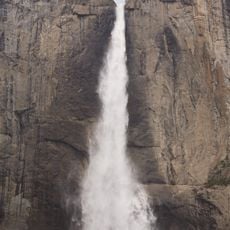
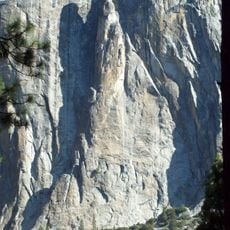
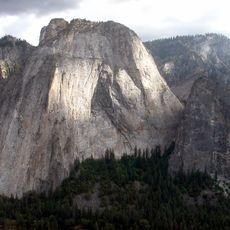
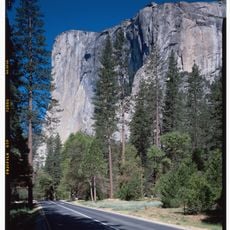
Ribbon Fall drops 1,612 feet (491 m) in a single unbroken plunge from the west side of El Capitan in Yosemite National Park, California. It is fed by melting winter snow and runs fullest in May and June, then dries for much of the year. The fall takes its name from its slender, ribbon-like stream.
The Native American name for the waterfall was "Lung-yo to-co-ya," meaning "pigeon basket or nest," likely referring to band-tailed pigeons in the area. James Hutchings translated it as "long and slender" and renamed it Ribbon Fall. Lafayette Bunnell disagreed and called it "Pigeon Creek Fall." In the 1860s a woman reportedly coined "Virgin's Tears" for its brief seasonal flow.
The Native American name for the fall was "Lung-yo to-co-ya", rendered by James Hutchings as "long and slender" and by Lafayette Bunnell as "Pigeon Creek Fall". In the 1860s a woman reportedly coined "Virgin's Tears" for its brief seasonal flow. The band-tailed pigeons of the area are the likely source of the original name.
The best viewpoint is along Southside Drive near signpost V14, where parking areas provide clear views across the valley. Plan your visit for spring or after heavy winter storms when water flow is strongest.
In exceptional winters, an ice cone forms at the base of Ribbon Fall and can reach a depth of 200 feet. The cone beneath Upper Yosemite Fall, by comparison, reaches 322 feet. The deposit appears only in some years and sits at the foot of the cliff below El Capitan's west face.
The community of curious travelers
AroundUs brings together thousands of curated places, local tips, and hidden gems, enriched daily by 93,744 contributors worldwide.