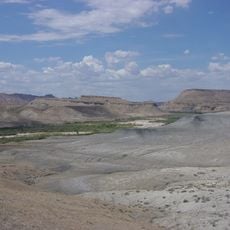
Wahweap Formation, Sedimentary rock formation in Grand Staircase-Escalante National Monument, Utah and Arizona, United States.
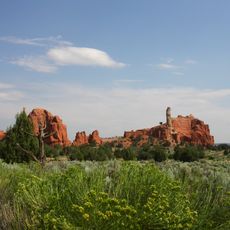
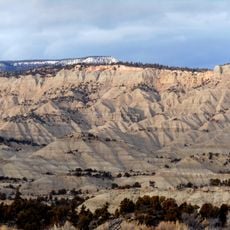
The Wahweap Formation is a sequence of sedimentary rock layers that extends across southern Utah and northern Arizona. It displays characteristic cliffs and slopes formed by different types of rock stacked on top of each other.
The layers formed during the Late Cretaceous period and preserve fossil remains of dinosaurs and early mammals. These deposits document a time when this region was an active center of sediment accumulation.
The formation's name comes from the Wahweap area around Lake Powell. Its shell beds yield large fossil crabs and over 1,900 gastropod specimens from siltstone, while petrified logs hold fossilized insect burrows. Visitors can look for these shell beds and trace fossils in the exposed rock.
The formation is accessible through marked trails in Grand Staircase-Escalante National Monument, with basic gear useful for field observation. Visitors should be prepared for unpredictable weather and rough terrain in this desert area.
In 2010, researchers found a trace fossil in the Wahweap Formation showing probable predation of primitive mammals by a maniraptoran dinosaur: at least two fossilized mammal den complexes with digging grooves beside them. The formation's capping sandstone also preserves tracks of crocodylomorphs, previously known in the area only from teeth.
The community of curious travelers
AroundUs brings together thousands of curated places, local tips, and hidden gems, enriched daily by 94,523 contributors worldwide.