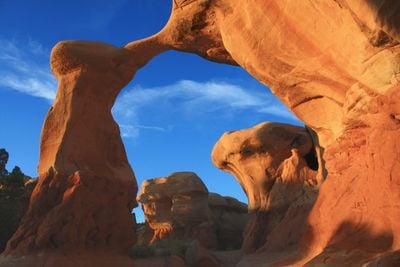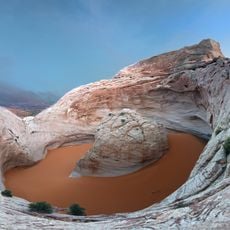
Devils Garden, Rock formation in Grand Staircase-Escalante National Monument, Utah, US.
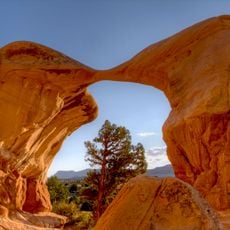
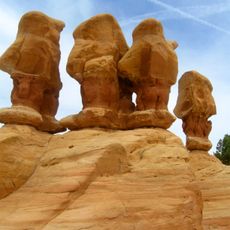
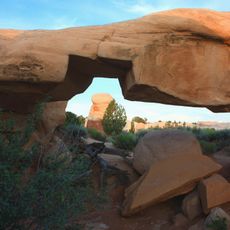
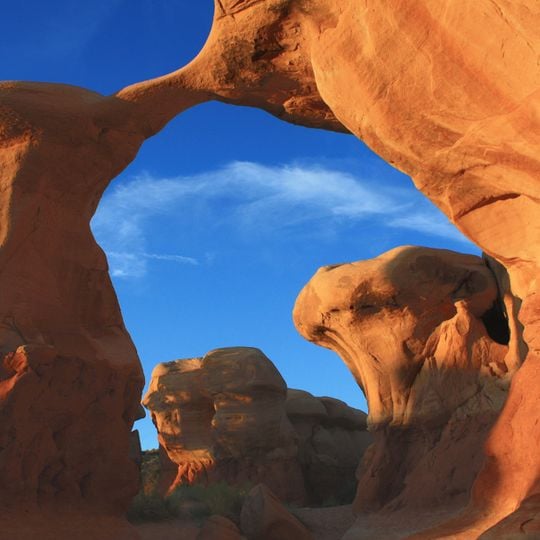
Devils Garden is a 640-acre protected area of hoodoos and natural arches in the Escalante Member of the Entrada Sandstone, formed in the Middle Jurassic. Metate Arch, a slender caprock arch, stands near the centre, with the thicker Mano Arch southeast of it. A group of four unnamed hoodoos nearby is a popular photographic subject. The formations sit in a compact 10-acre cluster beside the parking lot.
The sandstone layers here were laid down in the Middle Jurassic, 166 to 174 million years ago, as the Escalante Member of the Entrada Sandstone of the San Rafael Group. The Bureau of Land Management, which administers the whole Grand Staircase–Escalante National Monument, studied the site as a Wilderness Study Area; its district manager declined to recommend wilderness status in a 1991 report to Congress, citing the roads, parking lot, picnic tables and toilets near the formations. It stayed on the BLM's Wilderness Study Area list compiled in December 2010.
The two main arches carry the names Metate and Mano, after the flat grinding stone and the hand-held stone used together to grind maize. A cluster of four hoodoos nearby has no official USGS name but is the site's most photographed subject. Visitors walk unmarked footpaths worn into the soil between the formations.
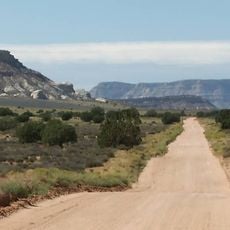
Access is via Hole-in-the-Rock Road, an unpaved route that requires time to drive and leads to the monument area. Visitors should prepare for hot, dry conditions and trails that cross uneven ground.
The four hoodoos near Metate Arch have no official USGS name, yet they are among the most photographed rocks in the garden. Metate Arch itself is a slender caprock span, while the thicker Mano Arch lies just southeast; both names come from the grinding stones once used in the region.
The community of curious travelers
AroundUs brings together thousands of curated places, local tips, and hidden gems, enriched daily by 93,184 contributors worldwide.