Hole in the Rock Trail, Historic pioneer trail in southeastern Utah, United States
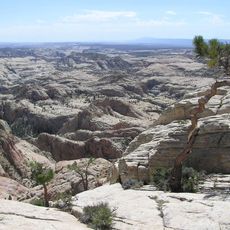
Hole in the Rock Trail is a 180-mile historic route from near Escalante to Bluff, named for a crevice in a 1,000-foot cliff above the Colorado River. Mormon pioneers enlarged the crevice to lower wagons to the river, which they forded; that section is now flooded by Lake Powell. The trail crosses slickrock sandstone and passes Grey Mesa, Clay Hill Pass and Comb Ridge.
The Hole in the Rock Trail was established in 1879 by about 230 Mormon settlers led by Silas S. Smith and Platte D. Lyman, who gathered at a spring near Fortymile Gulch. They enlarged a crevice in the cliff above the Colorado River, using wooden rails and rope riggings to lower wagons; the descent began on 26 January 1880, and Charles Hall's ferry carried them across. The expedition reached Bluff in April 1880, founding the settlement about 30 km from its intended site.
The name comes from the crevice in the cliff that the 1879 expedition widened to lower wagons to the Colorado. Near the route, Register Rocks once held the settlers' carved names, now under Lake Powell. The trail lies within Grand Staircase–Escalante National Monument and Glen Canyon National Recreation Area.
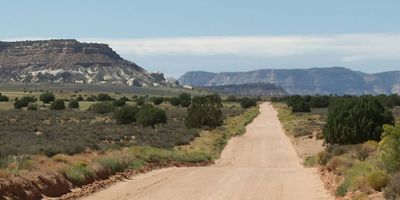
The western section is now the Hole-in-the-Rock Road, an unpaved route of about 99 kilometres (61 miles) that gives access to the Canyons of the Escalante and the remote western part of Glen Canyon National Recreation Area. In dry weather it can be driven at least as far as Dancehall Rock with an ordinary vehicle. After heavy rain, clay sections make the road unsafe, so avoid it then.
The Register Rocks, where the 1879–80 pioneers carved their names after fording the Colorado, now lie beneath Lake Powell. The Hole in the Rock itself is a natural crevice in a 1,000-foot cliff that the party widened to lower wagons by rope.
The community of curious travelers
AroundUs brings together thousands of curated places, local tips, and hidden gems, enriched daily by 93,176 contributors worldwide.