Coral Pink Sand Dunes State Park, State park in southern Utah, United States.
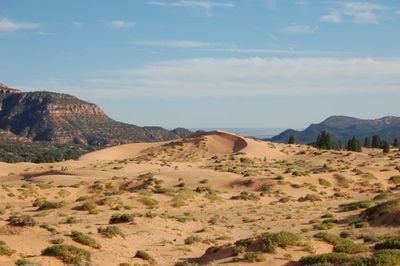
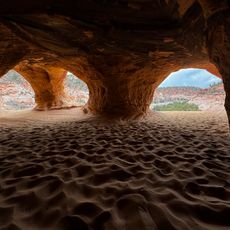
Coral Pink Sand Dunes State Park is a protected area in southern Utah between the Moquith and Moccasin mountain ranges. The colored sand dunes cover approximately 15 square kilometers (6 square miles) and sit at an elevation of around 1,800 meters (6,000 feet).
The sand deposits began forming around 15,000 years ago through weathering of Navajo sandstone from the surrounding mountains. The area was designated as a state park in 1963 to protect its geological features.
The park's name comes from the pink hue of the sand, which derives from the erosion of Navajo Sandstone around the dunes. The dunes have served as a filming location for several Hollywood productions, including Arabian Nights (1942), Ali Baba and the 40 Thieves (1943), Timbuktu (1958), MacKenna's Gold (1969) and One Little Indian (1973).
The grounds offer 34 camping spots with electricity and water hookups plus designated zones for off-highway vehicles and walking paths. The park lies roughly 16 kilometers (10 miles) west of Kanab and is reachable via a paved access road.
The Coral Pink Sand Dunes tiger beetle (Cicindela albissima) is found nowhere else on Earth; about 265 acres of the park are set aside to protect its habitat. The park also holds most of the remaining Welsh's milkweed (Asclepias welshii), a federally listed threatened plant. Several films were shot among the dunes, including Arabian Nights (1942) and MacKenna's Gold (1969).
The community of curious travelers
AroundUs brings together thousands of curated places, local tips, and hidden gems, enriched daily by 93,129 contributors worldwide.