Moqui Cave, Show cave and museum in Kanab, United States
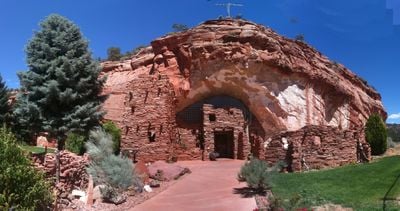
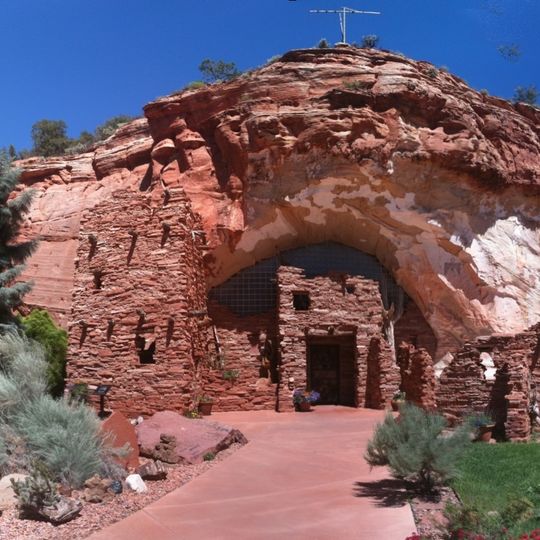
Moqui Cave is a 200-foot-deep excavation into Navajo Sandstone at the bottom of Three Lakes Canyon, about 5 miles north of Kanab. Its entrance is framed by stacked red sandstone blocks set into a larger red and orange rock face, with a flat paved walkway leading to a dark rectangular doorway. Inside, the cave holds a museum of fluorescent minerals, fossils, pottery, spear points, American Indian artifacts, dinosaur tracks over 140 million years old, and displays on the Anasazi and Ancestral Puebloans.
Archaeological digs indicate Anasazi people used the cave as a shelter or food store. White settlers rediscovered it in the 19th century, and in the 1920s it served as a speakeasy during Prohibition. Laura and Garth Chamberlain bought it in 1951 and opened a tavern and dance hall the next year, turning it into a museum and tourist attraction.
The name Moqui most likely comes from a Hopi word for "the dead," moki, tied to tribal myths rather than to the Hopi themselves. Behind the saloon bar, moqui marbles of various sizes are displayed; these concretions from the Navajo Sandstone gave rise to the legend of an ancient Moqui people.
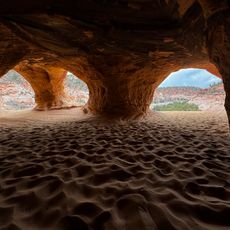
The cave sits on U.S. Route 89, about 5 miles (8 km) north of Kanab, and extends roughly 200 feet (61 m) into the Navajo Sandstone at the bottom of Three Lakes Canyon. The entrance is reached by a flat reddish paved walkway from the parking area, with a low stone wall framing the doorway. The interior is a sand mine cut into the rock rather than a natural cavern, so expect a man-made passage.
A special collection of minerals in the cave glows with bright colors under ultraviolet light. A dark room is set up specifically for viewing these minerals, letting visitors see this rare natural effect.
The community of curious travelers
AroundUs brings together thousands of curated places, local tips, and hidden gems, enriched daily by 94,343 contributors worldwide.