Lovelock Cave, Prehistoric cave in Nevada, United States
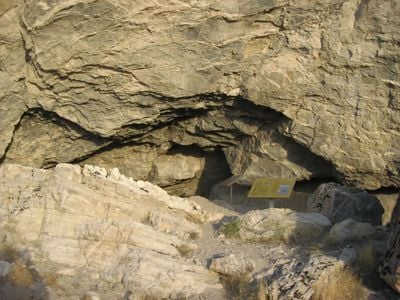
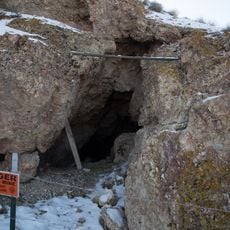
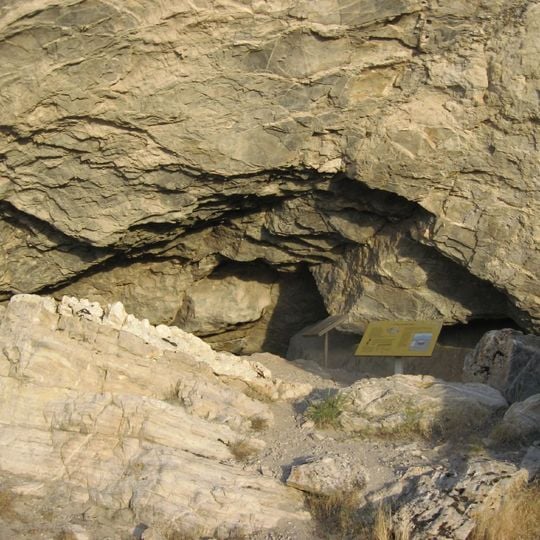
Lovelock Cave is a rock shelter and cave about 150 feet (46 m) long and 35 feet (11 m) wide, cut by wave action into layered tan and grey stone north of the Humboldt Sink. Its broad, shadowed mouth opens beneath a projecting overhang, with a slope of pale rock debris leading up to it. A sign on a post stands to the right of the opening.
People began using the cave around 2580 BCE and remained until about 1000 BCE, when changing conditions and the retreat of the lake altered the way of life. Archaeologists recovered thousands of objects starting in 1911, showing the daily routines and skills of these early inhabitants.
Paiute oral tradition identifies the cave's human remains as those of the Si-Te-Cah, said to mean "tule eaters", a people who took refuge in the cave and were killed by smoke. Sarah Winnemucca Hopkins, daughter of chief Winnemucca, recorded these stories in Life Among the Paiutes. The name Lovelock comes from a nearby ranch, not from the cave's inhabitants.
Access is through a path from Churchill County Road 399, where signs explain the archaeological importance of the site. Spring or autumn are the best times to visit, when desert temperatures are more comfortable.
The 1924 dig by Mark Raymond Harrington and L.L. Loud in Pit 12, Lot 4, yielded eleven duck decoys: eight painted and feathered, three unfinished. They were bound from tule, a grass-like herb, not replicas but original artifacts, now held by the National Museum of the American Indian.
The community of curious travelers
AroundUs brings together thousands of curated places, local tips, and hidden gems, enriched daily by 93,475 contributors worldwide.