Humboldt Cave, Archaeological cave in Churchill County, Nevada, United States.
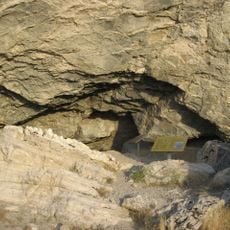
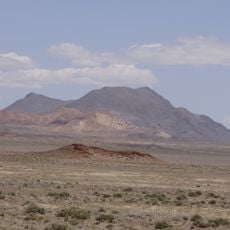
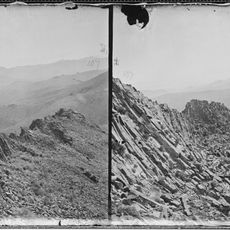
Humboldt Cave is an archaeological site in Churchill County, Nevada, formed by vertical faulting in a cliff face of the West Humboldt Range. Its entrance measures about 2.4 metres high and 1.8 metres wide, widening to 2.4 metres inside and extending roughly 15 metres into the cliff. Layers of tufa deposited by ancient Lake Lahontan coat the cave surfaces.
Archaeological excavations in the 1930s revealed caches containing preserved artifacts dating back roughly 2000 years. Radiocarbon analysis confirmed the age of materials and demonstrated long-term human activity at this location.
The cave's caches held duck decoys, bird-skin robes, rush mats, fiber bags, skin pouches and fur robes. A "shaman's cache" contained a bird-skin robe, hawk feathers and a stuffed canvasback duck head, which Robert Heizer linked to curative tokens or decoy making. Some objects point to trade with groups west of the Sierra Nevada and in the American Southwest.
The cave lies about 67 metres above the former Lake Lahontan bed, roughly 10 kilometres from Humboldt Sink, at the southern end of the West Humboldt Range. The entrance is about 2.4 metres high and 1.8 metres wide, opening into a passage some 15 metres deep. The floor was once covered by bat guano 0.9 to 1.8 metres deep, so expect uneven, dusty ground inside.
During the 1936 excavation, a wool sweater left in the cave was shredded by pack rats, and its pieces were later recovered down to the solid cave floor in a low hollow called the "South Alcove." The rats had filled this space with gathered material, including artifacts, jumbling the archaeological deposits.
The community of curious travelers
AroundUs brings together thousands of curated places, local tips, and hidden gems, enriched daily by 93,192 contributors worldwide.