Fruitland Formation, Geological formation in San Juan Basin, United States.
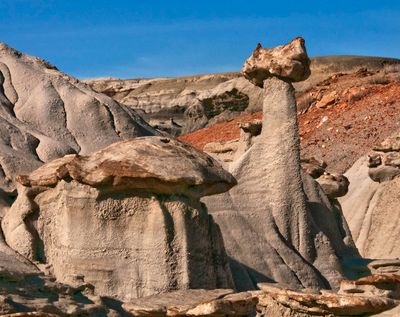
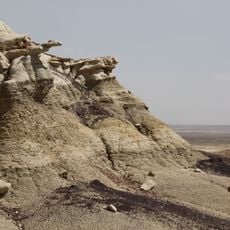
The Fruitland Formation is a sedimentary unit of the San Juan Basin in New Mexico and Colorado, made of sandstone, shale and coal laid down in marshy delta lowlands with poor drainage and frequent flooding. It rests on the Pictured Cliffs Sandstone and is capped by the younger Kirtland Formation, recording the final filling of the Cretaceous seaway. It is split into the lower Ne-nah-ne-zad Member and the upper Fossil Forrest Member.
These layers formed about 76 million years ago during the Cretaceous time when a vast sea covered part of this continent. The rocks record an ancient period when seawater regularly flowed across the region.
The formation's name comes from Fruitland, New Mexico, a town on what was the western shore of the Western Interior Seaway. Its coal beds have been mined along the outcrop, and since the 1980s they have yielded large amounts of coalbed gas, making the Colorado–New Mexico border area one of the most productive coal-methane zones in the United States.
The formation is not a site with marked trails or facilities; it is a geological unit exposed in outcrops across the San Juan Basin, so access depends on the specific exposure and land ownership. Its coal beds have been mined in places along the outcrop, and since the 1980s the coalbed methane field straddling the Colorado–New Mexico border has been among the most productive in the United States.
The formation is a source of natural gas seepage that occurs when methane escapes from the coal beds into the air. This is part of a larger pattern in the region that particularly interests researchers and geologists.
The community of curious travelers
AroundUs brings together thousands of curated places, local tips, and hidden gems, enriched daily by 93,525 contributors worldwide.