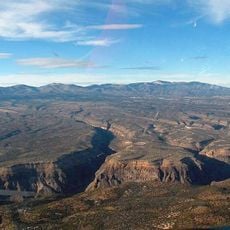
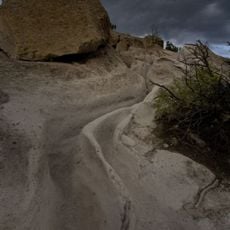
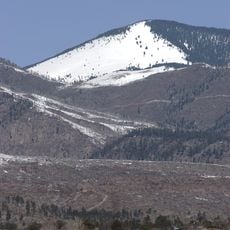
Tsirege, Archaeological site near White Rock, United States.
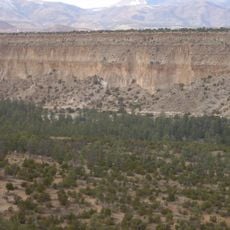
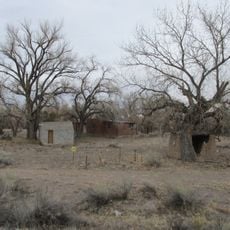
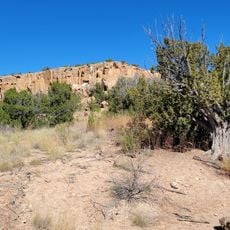
Tsirege is an archaeological site near White Rock that contains roughly 800 rooms, ten kivas, and a defensive wall built during the pre-Hispanic era. The location also includes a water reservoir and numerous panel carvings etched into rock surfaces.
The settlement was continuously occupied from around 1325 until 1600, marking an important period of Ancestral Puebloan presence in the region. This multi-century span of habitation reveals the stability and growth of these early communities.
The name Tsirege comes from the Tewa language and means "bird place", showing how indigenous peoples connected their settlements to the natural world around them. The rock carvings and building layouts visible today reflect these deep ties to the landscape.
The site sits on Los Alamos National Laboratory property and requires special permission to visit. Access is highly restricted since the location lies on private research grounds and can only be entered during rare organized tours.
The rock panels display carvings of Awanyu, a horned water serpent figure important in Puebloan spiritual beliefs. This repeated motif shows how water management and spiritual practice were woven into everyday life at the settlement.
The community of curious travelers
AroundUs brings together thousands of curated places, local tips, and hidden gems, enriched daily by 92,423 contributors worldwide.