Daniels & Fisher Tower, Clock tower in Denver, Colorado, United States
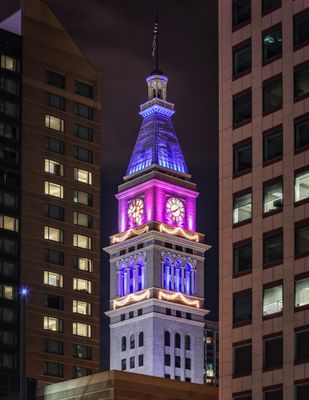
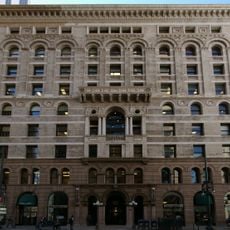
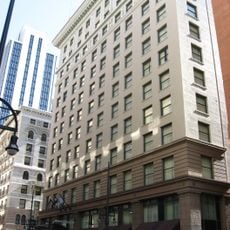
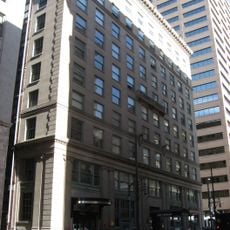
Daniels & Fisher Tower is a 20-storey, 325-foot (99 m) clock tower at 16th and Arapahoe Streets in Denver, built in 1910 as part of the Daniels & Fisher department store. Architect Frederick Sterner modelled it on St Mark's Campanile in Venice, using stone, brick and terracotta in an Italian Renaissance style. Clock faces 15 feet across sit on all four sides, and a 5,500-pound bell occupies the top two floors.
Built in 1910 as part of the Daniels & Fisher department store, the tower was designed by Frederick Sterner after St. Mark's Campanile in Venice. At 325 feet it was then the tallest building between the Mississippi River and California. May Company bought the store in 1958 and vacated the tower; when the store was demolished around 1971, the tower was saved and renovated in 1981. It was listed on the National Register of Historic Places on December 3, 1969.
The tower's basement has housed the Clocktower Cabaret since 2006, a venue founded by performer Lannie Garrett. The 5,500-pound bell cast by the McShane Bell Company in Baltimore in 1911 carries a dedication to William Cooke Daniels and Cicely Cook Daniels. On June 22, 1918, Jack Williams, called "the human fly", climbed from the base to the top of the flagpole in 38 minutes.
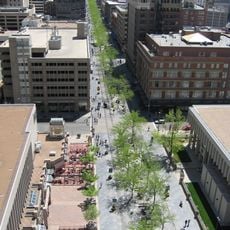
The tower stands at the corner of 16th and Arapahoe Streets, inside Skyline Park, and the Clocktower Cabaret occupies the basement level. The clock faces on all four sides are visible from the street at any hour, so the exterior can be seen without entering the building.
On June 22, 1918, Jack Williams, known as "the human fly", climbed the tower from its base to the top of the flagpole in 38 minutes. In 1929 a student nurse, Doris Heller, fell from the twentieth story onto the seventeenth-floor balcony and was not found until 48 hours later.
The community of curious travelers
AroundUs brings together thousands of curated places, local tips, and hidden gems, enriched daily by 93,789 contributors worldwide.