Naramata, Heritage site in Penticton, Canada
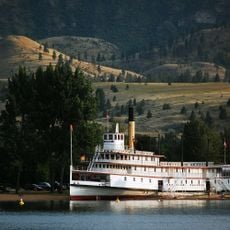
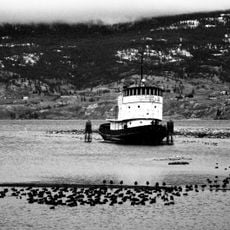
SS Naramata is a steel-hulled steam tug beached beside her sister ship SS Sicamous at the S.S. Sicamous Marine Heritage Park in Penticton. Her hull, engine, boiler and steel fittings were prefabricated in Port Arthur, Ontario, and assembled at Okanagan Landing, where construction ran from September 1913 to 20 April 1914. A steel staircase installed by the restoration society gives access to the deck.
Built for the Canadian Pacific Railway, the Naramata was pre-manufactured in Port Arthur, Ontario, by Western Dry Dock and Shipbuilding Company, with final assembly at Okanagan Landing. Construction began in September 1913 and finished on 20 April 1914 at a cost of CA$43,000. The tug was named after the village of Naramata, then a major fruit supplier for the valley. Retired in August 1967, she passed through several owners before the S.S. Sicamous Restoration Society took over her maintenance in 1996.
The tug is named after the village of Naramata, which in 1914 supplied much of the Okanagan Valley's fruit. Crews of 11 to 13 men pushed barges holding up to ten railcars each, and in winter ran ahead of the SS Sicamous leaving a cardboard trail to mark open water. The ship had the lake's first flushing toilet, and crew had to shower weekly.
The tug sits beached beside SS Sicamous in the S.S. Sicamous Marine Heritage Park in Penticton, where a steel staircase installed by the restoration society gives visitors access. The hull is corroded and the ship is fenced during work; a plan approved in 2026 will raise her into a cradle, with construction due to start in March 2027.
Naramata was the first vessel on Okanagan Lake with a flushing toilet and a working shower; because the work was dirty, crew had to shower at least once a week, and people joked they were the "cleanest and dirtiest" men on the lake.
The community of curious travelers
AroundUs brings together thousands of curated places, local tips, and hidden gems, enriched daily by 93,900 contributors worldwide.