Edward Pulaski Tunnel and Placer Creek Escape Route, Historic mining tunnel in Shoshone County, United States
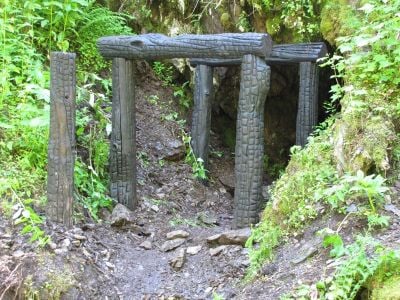
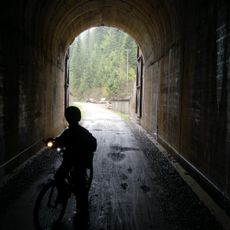
The Edward Pulaski Tunnel is a short prospecting tunnel, 250 feet long, 6 feet high and 5 feet wide, cut into the bank of Placer Creek about 10 miles southwest of Wallace, Idaho. Its entrance was fitted with cedar floor planks and squeeze caps logs to prevent spalling. The tunnel was abandoned after no ore was found.
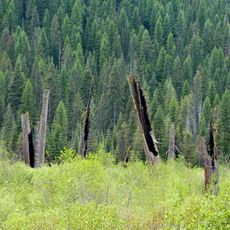
The tunnel was a short, abandoned prospecting adit where no ore was found, 250 feet long, 6 feet high and 5 feet wide, with cedar floor planks and squeeze caps at the entrance. On 20 August 1910, Edward Pulaski led his 45-man crew and two horses inside as the Great Fire of 1910 surrounded them. Six men and the horses died; 39 survived. The tunnel and escape route were listed on the National Register of Historic Places in 1984.
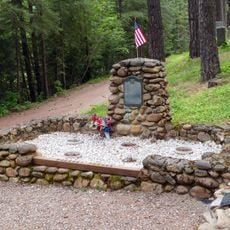
The tunnel preserves the marks of early Idaho panhandle prospecting: cedar floor planks and squeeze-cap logs still line the entrance, and the site yields information on historic mining methods. A dozen interpretive signs along the trail recount Pulaski, the 1910 fire and features passed on the way.
The site can be reached by following a hiking path that starts at a marked trailhead and crosses several bridges along the way. Wear sturdy shoes and bring water, as the route passes through mountainous terrain.
The tunnel was a failed prospect: no ore was ever found, so the miners abandoned it after driving only 250 feet (76 m). Its opening measured 6 feet (1.8 m) high and 5 feet (1.5 m) wide, with cedar floor planks and squeeze caps logs set at the entrance to prevent spalling. That modest digging is why the site also documents historic mining methods in the Idaho panhandle.
The community of curious travelers
AroundUs brings together thousands of curated places, local tips, and hidden gems, enriched daily by 94,090 contributors worldwide.