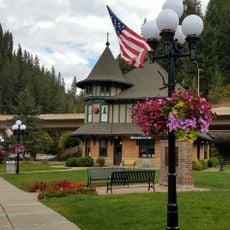
Burke, ghost town in Shoshone County, Idaho, United States
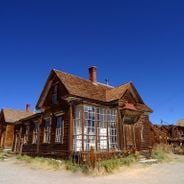
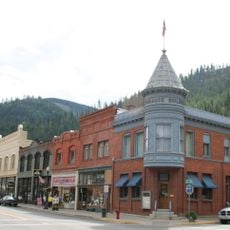
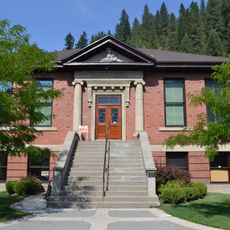
Burke is an abandoned mining settlement in Shoshone County, Idaho, situated in a narrow canyon at about 3,700 feet elevation. Surviving stone and brick buildings show the unusual construction methods needed to fit structures into the tight valley floor only about 300 feet wide.
Miners found lead and silver in Burke Canyon in 1884, and the Tiger Mine opened that May. The town itself was formally established in November 1887, when D.C. Corbin had laid 3 miles of the Canyon Creek Railroad; the first ore shipment to Wallace followed on December 12, 1887. Avalanches in 1890 and 1910, the 1910 Great Fire, flooding in 1913 and a 1923 fire struck the town repeatedly. Mining ended in 1991 with the closure of the Star mine.
Burke takes its name from the canyon it fills, a 300-foot-wide (91 m) gap where the Northern Pacific rail spur ran down the main street. The Tiger Hotel, opened in 1896 as miners' boarding rooms, was later cut to let the track pass through its lobby, with an enclosed walkway above the rails linking its two halves. Resident Bill Dunphy dismissed the tale of awnings hoisted for passing trains as "a good story".
Burke lies about 7 miles northeast of Wallace on Burke-Canyon Creek Road, State Highway 4, at 3,700 feet elevation. The canyon floor is only about 300 feet wide, so the road and former rail line share the same tight corridor. The site is a ghost town with no residents; the buildings are derelict and fenced, so view them from the road rather than entering.
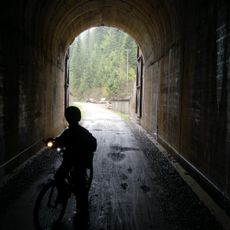
The Tiger Hotel was constructed with a tunnel running through its lobby so trains passed directly through the entrance hall, an unusual solution to extreme space constraints. This design allowed railroad transport and hotel operations to coexist in an extremely limited footprint.
The community of curious travelers
AroundUs brings together thousands of curated places, local tips, and hidden gems, enriched daily by 93,782 contributors worldwide.