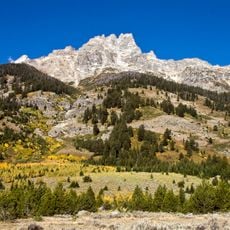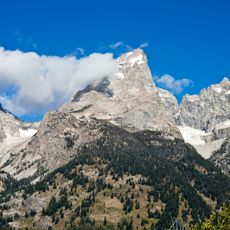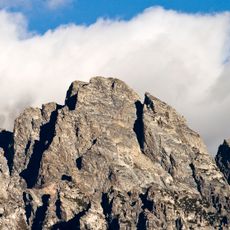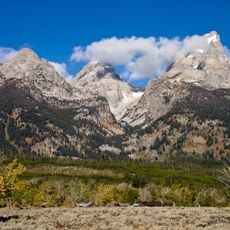
Grand Teton, Mountain summit in Teton Range, Wyoming, United States
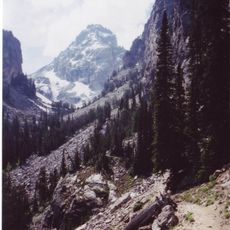
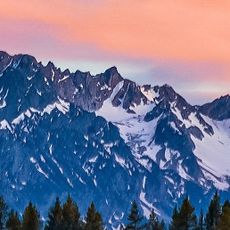
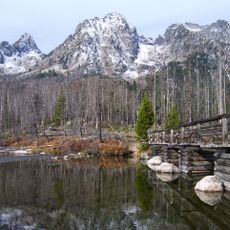
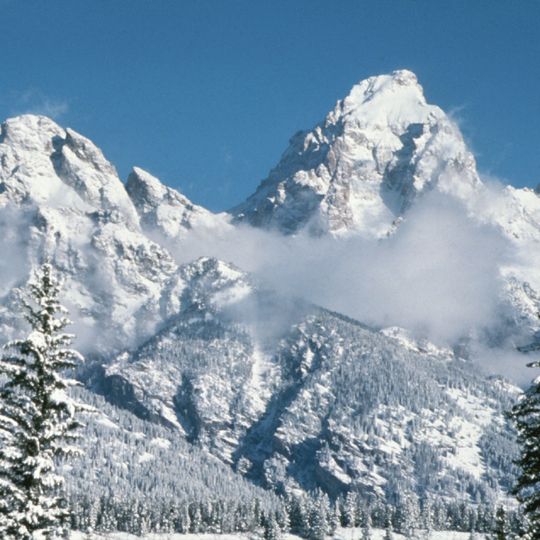
Grand Teton rises 13775 feet (4199 m) above sea level with steep granite walls and a sharp pyramid profile. The north face drops more than 4000 feet (1219 m) and forms one of the most prominent rock walls in North America.
William Owen and his team reached the top in 1898 and established the Owen-Spalding route as the first documented ascent. An earlier party led by Nathaniel Langford claimed an 1872 ascent, but that claim remains disputed to this day.
The name comes from French: téton means "teat", given by French-Canadian or Iroquois members of a North West Company expedition led by Donald McKenzie. Claims that it honours the Teton Sioux are unsubstantiated, as that people lived some 200 miles away in the Dakotas. On the summit of The Enclosure, a side peak, stands a man-made palisade of rocks, probably built by Native Americans.
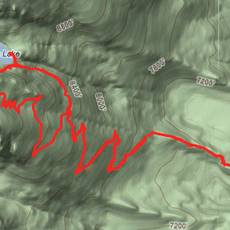
Climbing permits and gear can be arranged at Jenny Lake Ranger Station, where all mountaineers must register before heading up. The best conditions occur between June and September when snow and ice retreat from the routes.
Bill Briggs completed the first full ski descent from the summit in 1971 via the East Face and Stettner Couloir. Only a few skiers attempt this technically demanding line each year, and it remains one of the most difficult ski descents in North America.
The community of curious travelers
AroundUs brings together thousands of curated places, local tips, and hidden gems, enriched daily by 92,307 contributors worldwide.