Grand Canyon of the Yellowstone, Natural canyon in Yellowstone National Park, United States.
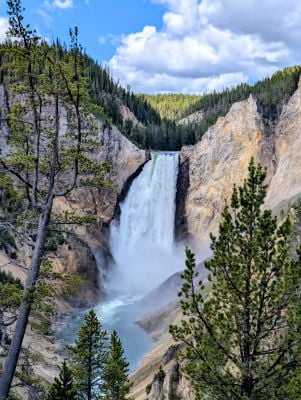
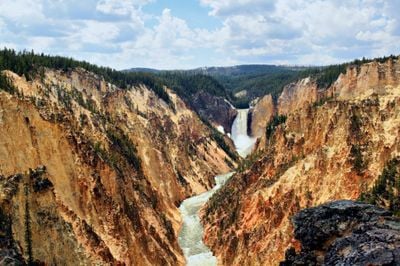
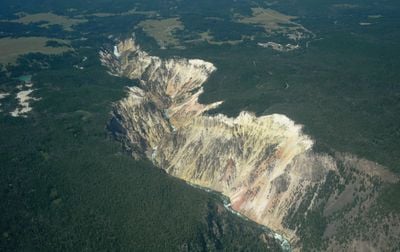
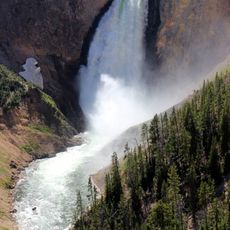
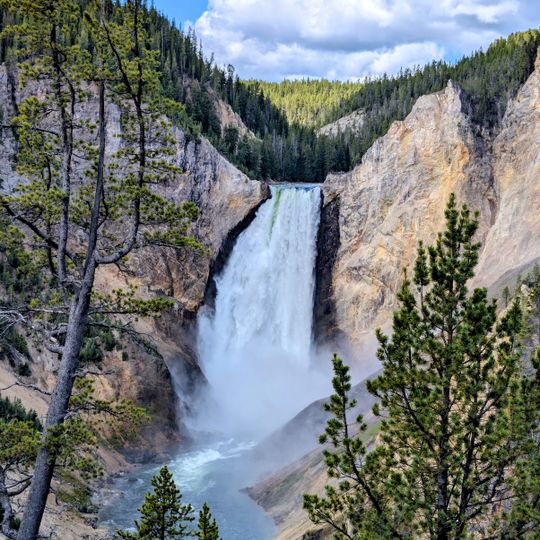
The Grand Canyon of the Yellowstone is a V-shaped gorge on the Yellowstone River, about 24 miles long, 800 to 1,200 feet deep and 0.25 to 0.75 miles wide. Its walls of rhyolite and older tuff are coloured yellow, orange and red by geothermally altered iron deposits. Three waterfalls lie near Canyon Village: Upper Falls at 33.2 m, Crystal Falls at 39 m and Lower Falls at 94 m.
The canyon is young, cut after the last ice age when ice dams at the outlet of Yellowstone Lake melted about 14,000 to 18,000 years ago and released a huge flow of water. The river eroded rapidly into rhyolite lava flows, exposing older tuff in places. The first published accounts came from the Cook–Folsom–Peterson Expedition of 1869 and the Washburn expedition of 1870.
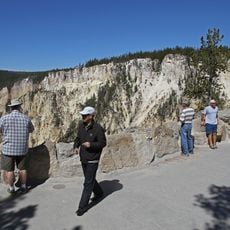
The canyon's name comes from the yellow, orange and red tints of its walls, caused by geothermally altered iron deposits in the rock. Thomas Moran painted at Artist Point during the Hayden Expedition of 1871, and the overlook is named for that work. Visitors today follow rim drives and trails to viewpoints such as Artist Point and Uncle Tom's Trail.
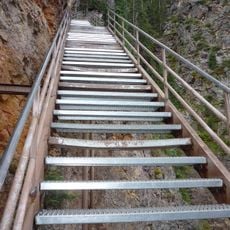
Visitors can access the canyon via North Rim Drive and South Rim Drive, which have parking areas near viewpoints and overlooks. Wear sturdy shoes for walking, as paths are uneven and some trails wind downhill with steep sections.
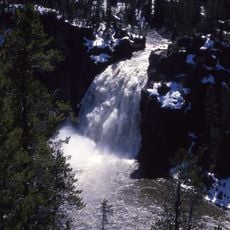
The canyon holds three named waterfalls: Upper Falls at 33.2 m, Lower Falls at 94 m, and the lesser-known Crystal Falls, 39 m high, where Cascade Creek meets the Yellowstone River. Thomas Moran painted at Artist Point during the 1871 Hayden expedition, and the overlook still carries that name.
The community of curious travelers
AroundUs brings together thousands of curated places, local tips, and hidden gems, enriched daily by 92,605 contributors worldwide.