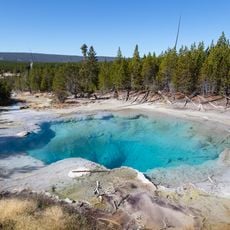
Echinus Geyser, Acid geyser in Norris Geyser Basin, Yellowstone National Park, Wyoming.
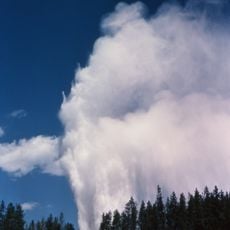
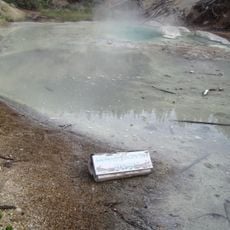
Echinus Geyser is a fountain-type geyser in the Norris Geyser Basin of Yellowstone National Park. Its eruptions are unpredictable, throwing water and steam 12 to 18 metres high for about four minutes. The cone's spiny surface, resembling a sea urchin, gives the geyser its name.
Echinus was named during a U.S. Geological Survey of the park in the late 1870s or early 1880s, after the spiny cone resembling a sea urchin. Before 1998 it erupted every 35 to 75 minutes, with major eruptions lasting up to 118 minutes. A speculated secondary underground water source is thought to have been severed, making eruptions unpredictable since.
The name comes from the spiky mineral deposits that form the geyser cone, resembling sea urchin spines. You can observe this distinctive form when you visit the site.
Activity here is difficult to predict, so ask park rangers for current information before planning your visit. Bring comfortable walking shoes since you will need to hike from the parking area to the viewpoint.
The water here is extremely acidic with a pH between 3.3 and 3.6, making it the largest acid-water geyser on Earth. This acidic chemistry prevents the living organisms found in other geysers from thriving here.
The community of curious travelers
AroundUs brings together thousands of curated places, local tips, and hidden gems, enriched daily by 93,692 contributors worldwide.