Obsidian Cliff Kiosk, Tourism information kiosk at Obsidian Cliff, Yellowstone National Park, US.
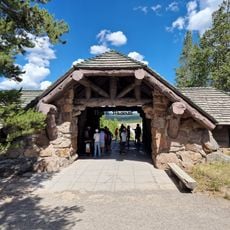
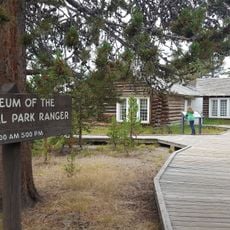
Obsidian Cliff Kiosk is a small rustic-style structure built in 1931 to shelter an interpretive exhibit along the Grand Loop Road, just north of Obsidian Cliff. It is one of the National Park Service Rustic buildings, alongside the Fishing Bridge, Madison and Norris museums, and its exhibit was designed by NPS staff member Carl Russell.
The kiosk was built in 1931 as part of an effort to provide interpretive exhibits along the Grand Loop Road. Its exhibit was designed by National Park Service staff member Carl Russell, and the structure is grouped with the Fishing Bridge, Madison and Norris museums as an example of National Park Service Rustic style. It is considered the first wayside exhibit in the national park system. It was listed on the National Register of Historic Places on 9 July 1982.
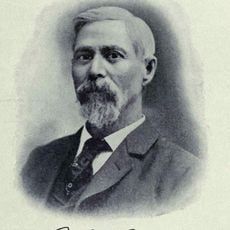
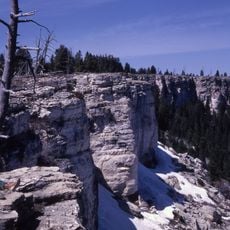
The kiosk's exhibit was designed by National Park Service staffer Carl Russell. It explains that obsidian was quarried here for 12,000 years, and that between roughly 200 BC and 400 AD thousands of pounds of it travelled to Ohio via the Missouri, Mississippi and Ohio rivers as ceremonial goods for the Hopewell culture. The Crow call the cliff Shiiptacha Awaxaawe, roughly "Ricochet Mountain".
The kiosk is positioned along the Grand Loop Road between Mammoth and Norris, making it accessible to drive-by visitors who want to stop and learn. The informational panels are viewable year-round when the road is open and offer quick explanations for those with limited time.
The structure earned recognition on the National Register of Historic Places in 1982 for its pioneering role in public education within national parks. This unusual honor acknowledged how a simple building helped establish a new tradition of explaining natural places to visitors.
The community of curious travelers
AroundUs brings together thousands of curated places, local tips, and hidden gems, enriched daily by 92,627 contributors worldwide.