Obsidian Cliff, Volcanic glass cliff in Yellowstone National Park, US.
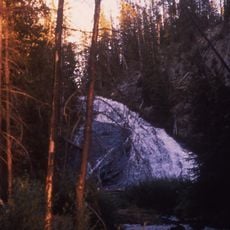
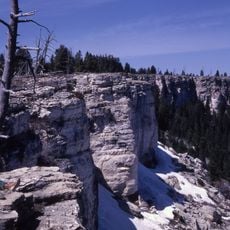
Obsidian Cliff is a rhyolite lava flow about 180,000 years old on the east side of the Grand Loop Road, 13 miles south of Mammoth Hot Springs. Its face rises 150 to 200 feet above Obsidian Creek and runs for roughly half a mile. Vertical columns are cooling fractures; obsidian is densest at the base, giving way to pumice toward the top.
Native people extracted obsidian from this location for thousands of years to make tools and weapons. The material traveled along trade routes that connected communities across North America and revealed long-standing connections between distant groups.
The Crow call the cliff Shiiptacha Awaxaawe, roughly "Ricochet Mountain". Shoshone, Blackfoot, Salish and Kootenai oral traditions recall women gathering cinnabar and other resources here and making prayers at the cliffs. Obsidian from the site also reached the Hopewell culture in Ohio as grave goods between about 200 BC and 400 AD.
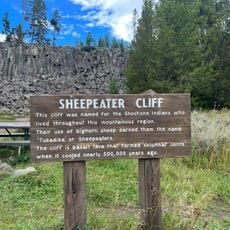
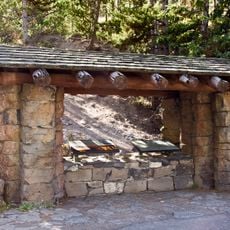
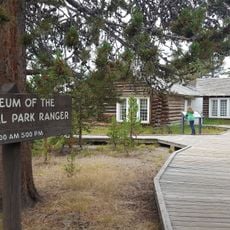
The site sits along the Grand Loop Road between Mammoth and Norris with marked pull-offs for viewing and parking. Information signs explain the geology and what you are looking at from the roadside.
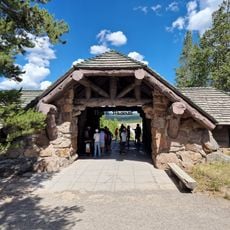
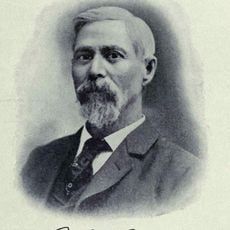
The Crow name for the cliff, Shiiptacha Awaxaawe, translates roughly as "Ricochet Mountain". The trapper Jim Bridger described a "glass mountain" to listeners who dismissed it as a tall tale. The Obsidian Cliff Kiosk of 1931, just north on the Grand Loop Road, was the first wayside exhibit in the National Park system.
The community of curious travelers
AroundUs brings together thousands of curated places, local tips, and hidden gems, enriched daily by 92,632 contributors worldwide.