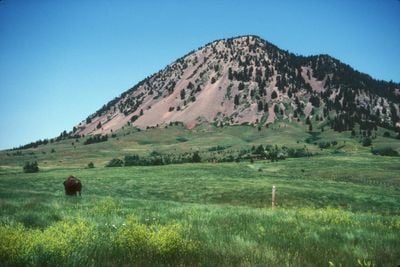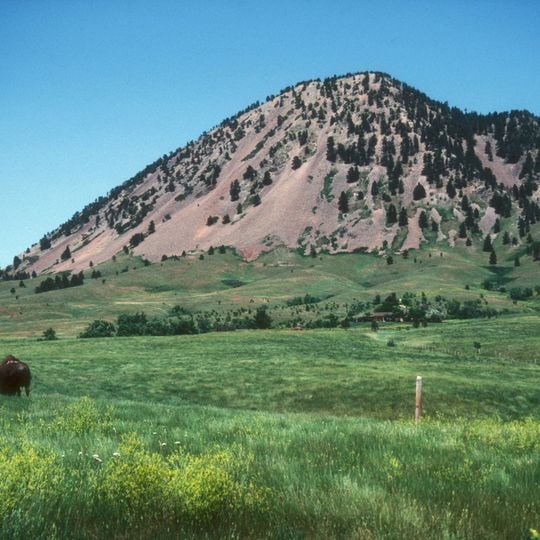
Bear Butte, Sacred geological formation in Meade County, South Dakota.
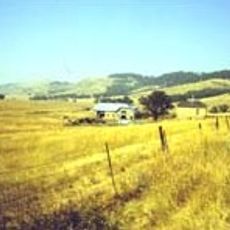
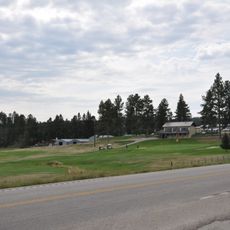
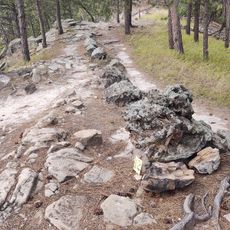
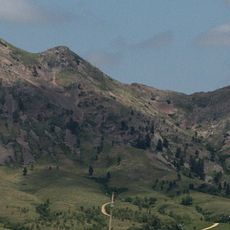
Bear Butte is a distinctive rock formation in the Black Hills, rising sharply from the surrounding landscape through igneous geological processes. Multiple trails crisscross the area, offering access to overlooks and taking visitors through pine forests and meadows.
Artifacts found on and near Bear Butte date back 10,000 years. In 1857 a council of many Indian nations met here to discuss the growing presence of white settlers, and in 1874 George Armstrong Custer camped near the butte while confirming rumors of gold in the Black Hills. Ezra Bovee homesteaded the southern slopes, and in spring 1945 the Northern Cheyenne held a ceremony there to pray for the end of World War II. The site became a state park in 1961 and a National Historic Landmark in 1981.
This butte holds deep spiritual importance for several Native American tribes who gather here for ceremonies and sacred rituals. Visitors will notice colorful prayer cloths and ceremonial bundles tied to trees throughout the grounds, reflecting ongoing spiritual practices.
A summit trail leads to the top, which is the northern terminus of the South Dakota Centennial Trail. The park lies west of South Dakota Highway 79, with a campsite on the west side of the highway and a bison herd at the mountain's base on the summit side. Park policy asks visitors to respect worshippers and leave religious offerings undisturbed; fees are waived for those undertaking religious activities.
Bear Butte is the northern terminus of the South Dakota Centennial Trail, a long-distance route that ends at the summit. The trail's southern end lies at Wind Cave National Park.
The community of curious travelers
AroundUs brings together thousands of curated places, local tips, and hidden gems, enriched daily by 92,790 contributors worldwide.