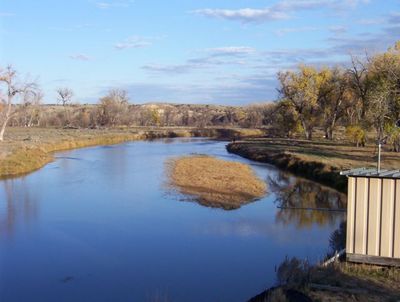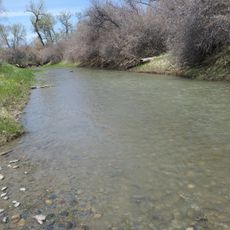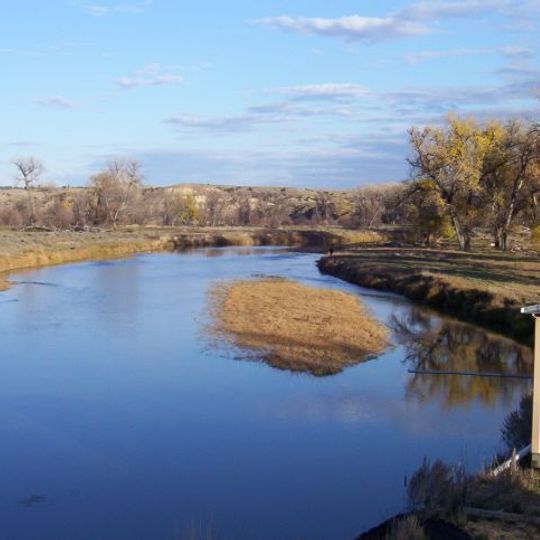
Tongue River, River in Custer County, United States
The Tongue River is a waterway that flows through southeastern Montana from the Bighorn Mountains toward the eastern plains. Starting at higher elevations in the mountains, it winds through several counties and agricultural areas before reaching its confluence with the Yellowstone River system.
The river was named during early American exploration of the region in the 1800s. The establishment of Fort Keogh near its mouth marked a turning point, as military presence reshaped the area following major conflicts between settlers and Native American groups.
The Tongue River runs past the Northern Cheyenne community lands, where generations of people have relied on its waters for sustenance and daily life. The river remains a focal point where local traditions and the land continue to shape each other.
Visitors can access the river for fishing, boating, and hiking through various public areas and access points along its length. The best time to visit is during warmer months when water conditions are more stable and pathways are easier to navigate.
The river passes through multiple ecological zones, each supporting different plant and animal communities as elevation drops from the mountains to the plains. This variety creates natural corridors that wildlife use when moving with seasonal changes.
The community of curious travelers
AroundUs brings together thousands of curated places, local tips, and hidden gems, enriched daily by 92,018 contributors worldwide.