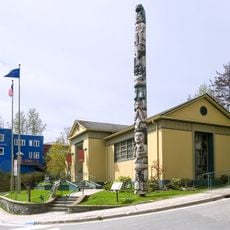
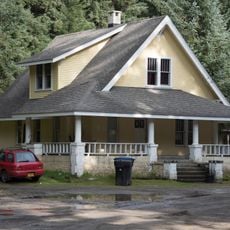
Alaska State Centennial Museum, State museum and cultural center in Juneau, United States.
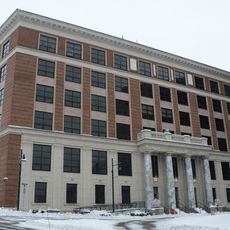
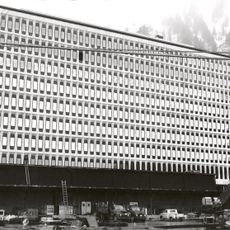
The Alaska State Centennial Museum is a building in Juneau that houses collections on natural history, indigenous peoples, and Alaska's artistic heritage. The building contains several gallery spaces organized to show objects related to different periods and aspects of the state's development.
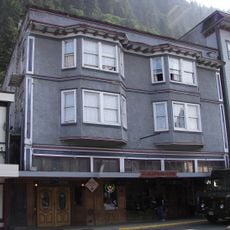
The Alaska State Museum was founded on 6 June 1900 on the initiative of the U.S. Congress, to collect, preserve and exhibit artifacts and media from Alaska. It had no permanent home for 20 years until the collection was shown in Juneau's Arctic Brotherhood Building. In 1923 the Alaska Territory administration took over the museum, adding research, guided tours and an educational role; by the mid-1940s the collection had outgrown the space. A one-percent sales tax rise in Juneau, introduced in 1967 for the centennial of the Alaska purchase, funded a new facility, and the collection has grown from 5,500 to 27,000 objects.
The museum's ethnographic holdings cover Tlingit, Haida and Tsimshian of the Northwest Coast, Athabascan, Inupiaq, Yup'ik, Alutiiq and Unangax peoples. The building is named for Father Andrew P. Kashevaroff, a Russian Orthodox priest and the museum's first curator, and is known locally as the APK.
The building is located in downtown Juneau and is easy to reach on foot, with parking available nearby for those arriving by car. It is helpful to check opening hours before your visit, as these may vary by season.
The museum's new building, opened on 6 June 2016 after a $139 million renovation, is named after Father Andrew P. Kashevaroff, a Russian Orthodox priest who served as the museum's first curator. It is also known as the APK and joins the state library and archives under one roof.
The community of curious travelers
AroundUs brings together thousands of curated places, local tips, and hidden gems, enriched daily by 93,367 contributors worldwide.