White Pass, Mountain pass on the Alaska–British Columbia border, Canada
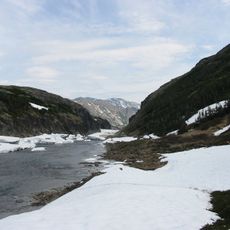
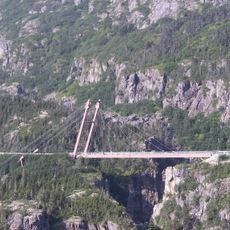
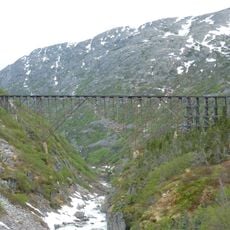
White Pass is a mountain pass at 873 m in the Boundary Ranges of the Coast Mountains, on the Alaska–British Columbia border. It links the port of Skagway to Lake Bennett, at the headwaters of the Yukon River. A narrow-gauge railway built between 1898 and 1900 crosses the pass, and the Klondike Highway runs parallel to its tracks. At the summit a sign marks the crossing, beside a rocky mound with U.S. and Canadian flags.
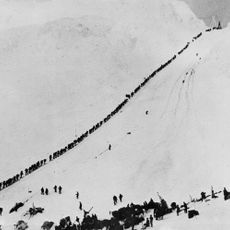
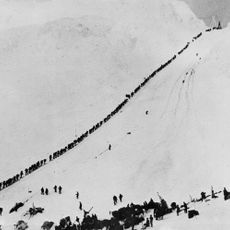
This mountain crossing became a major route during the Klondike Gold Rush of 1898, when thousands of prospectors headed toward Yukon gold fields. The narrow-gauge railway was completed in 1900 to provide a safer alternative to the treacherous mountain trails.
The construction of the White Pass and Yukon Route railroad in 1900 established a permanent transportation link between coastal Alaska and interior Canadian territories.
The railway offers regular passenger service with customs checks required at the border station. Visitors should bring warm clothing and be prepared for changing weather conditions in the mountains.
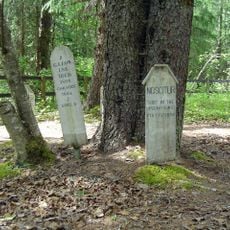
The pass was unknown to non-natives until 1887, when William Ogilvie learned of it through a Chilkoot man named Jim and named it for Canadian Interior Minister Thomas White. Among the Chilkoot men hired to carry supplies on that expedition was Skookum Jim Mason, who later helped discover the Klondike gold deposits.
The community of curious travelers
AroundUs brings together thousands of curated places, local tips, and hidden gems, enriched daily by 92,634 contributors worldwide.