Peace River Formation, Geological formation in northern Alberta, Canada
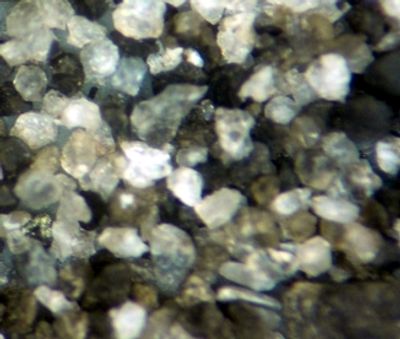
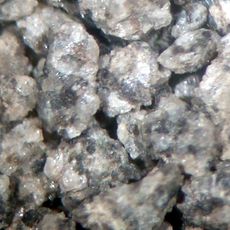
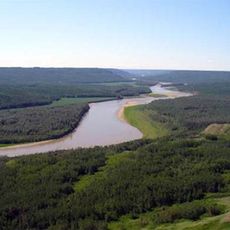
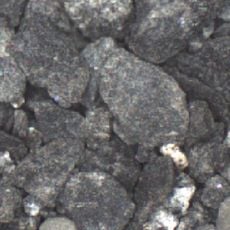
The Peace River Formation is a middle Albian stratigraphic unit of the Western Canadian Sedimentary Basin, named after the Peace River and first described by McConnell in 1893 on the river's banks between the Smoky River confluence and the mouth of the Notikewin River. It averages 60 feet (20 m) thick and consists of greywacke, coal, coarse to fine marine sandstone and dark, fissile, non-calcareous shale. It is a subdivision of the Fort St. John Group, underlain by the Spirit River Formation and overlain by the Shaftesbury Formation.
Geologist McConnell first documented this layered sequence in 1893 along the Peace River, revealing its importance for understanding North American geological history. The discovery proved essential for research into sedimentary deposits across western Canada.
The formation's name comes from the Peace River, where McConnell described it in 1893 on the banks downstream of the Smoky River confluence to the mouth of the Notikewin River. Its members carry names used across the basin: the Harmon, Cadotte and Paddy members, the last found only in the Peace River Country south of Clear Hills.
This formation is mainly accessible through scientific drilling and field surveys in the region rather than public viewing. The deeper layers are primarily explored by energy companies searching for natural gas resources.
The Paddy Member occurs only in the Peace River Country of northern Alberta, south of the Clear Hills, while the Cadotte and Harmon members are found in both Alberta and north-eastern British Columbia. In eastern and central Alberta the Harmon Member correlates with the Joli Fou Formation and the Cadotte Member with the Viking Formation.
The community of curious travelers
AroundUs brings together thousands of curated places, local tips, and hidden gems, enriched daily by 92,641 contributors worldwide.