Big Well, Water well in Greensburg, United States
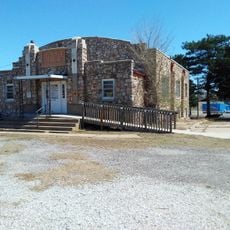
The Big Well is a stone-lined water well 109 feet deep in Greensburg, Kansas, dug between 1887 and 1888. Visitors descend an illuminated stairway inside the shaft to the bottom. The entrance has a gabled roof with white posts and a sign reading "THE BIG WELL" with a downward arrow.
Constructed between 1887 and 1888, the well was dug to supply water for railroad operations and the growing town. Workers used hand tools and simple equipment to excavate deep into the earth, creating a reliable water source for the region.
The well's name appears in black letters on the white gable of its entrance, above a downward arrow. Inside, a large open book is displayed on a stand behind glass panels. The site also keeps storm debris from the 2007 tornado, including stop signs, clocks and the remains of Greensburg's Federal Signal Thunderbolt siren.
Visitors can walk down and up illuminated staircases with viewing platforms at different levels for breaks and observation. Comfortable shoes are advisable since there are multiple flights of stairs to navigate.
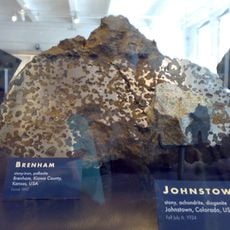
The museum displays a Brenham half-ton pallasite meteorite recovered from the area, billed as the world's largest single-piece pallasite, though other samples hold that title. Insured for $1 million, it went missing after the May 4, 2007 tornado and was found beneath a collapsed wall, then shown at the Sternberg Museum in Hays before returning.
The community of curious travelers
AroundUs brings together thousands of curated places, local tips, and hidden gems, enriched daily by 94,071 contributors worldwide.