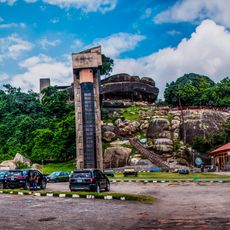
Akaba Idena, Historical museum and cultural monument in Kétou, Benin.
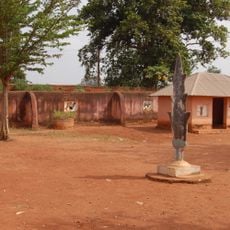
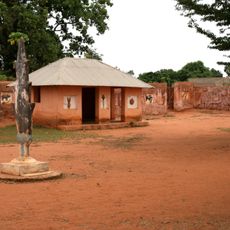
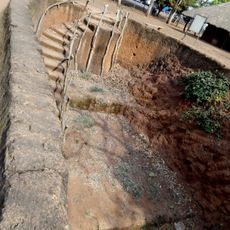
Akaba Idena is a monumental gate complex about two kilometres from the royal palace of Kétou, Benin, made of earthen walls with carved wooden elements. Two gates, one male and one female, stand in the remains of a rampart and trench several kilometres long. The gate compound shelters shrines to Yoruba deities and adjoins a quarter that has kept its traditional layout.
Kétou was founded in the 14th century, and the two gates served as the single entrance to the kingdom, closing by themselves in times of danger. In the 18th century the town was fortified with a trench and an earthen rampart several kilometres long. King Glèlè of Abomey conquered and destroyed Kétou in 1886; in 1894, to protect the site, King Oyingin had the gate and ramparts rebuilt. Their remains still stand.
The name comes from Yoruba: akaba means gate and idena means that which blocks the way. The two gates, one male and one female, are venerated by the local community, and the gate complex shelters shrines to Yoruba deities that are held to protect Kétou physically and spiritually. The site stands near the royal palace, in a quarter that has kept its traditional appearance.
Allow time for a guided tour to fully understand the details of the structures and collections. The site is accessible on foot and offers good views of the architecture from ground level, especially when walking around the ramparts.
The name Akaba Idena comes from the Yoruba language, where Akaba means gate and Idena translates to that which blocks the path. This naming directly reflects the original purpose of the fortification as a blocking structure.
The community of curious travelers
AroundUs brings together thousands of curated places, local tips, and hidden gems, enriched daily by 92,803 contributors worldwide.