Aetokremnos, Archaeological site near Limassol, Cyprus
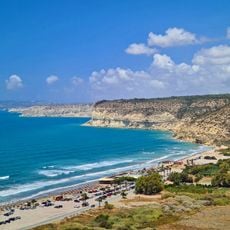
Aetokremnos is a rock shelter on a steep cliff about 40 m above the Mediterranean, near Limassol on Cyprus's south coast. Excavations of roughly 40 m² exposed four layers, the third sterile, with bones of the Cypriot pygmy hippopotamus, a few dwarf elephant remains and around 1,000 flint tools. The ground is loose, light-coloured stone and rubble; the cliff face above shows horizontal crevices and low scrub.
Discovered in 1960 by an anonymous amateur who reported it to Stuart Swiny, the shelter was excavated by Swiny and others. Its bone beds were dated by 36 radiocarbon determinations to a short occupation around 11,775 years BP, with a range of 11,504 to 12,096 years BP. The site also yielded about 1,000 flint artifacts resembling Natufian tools.
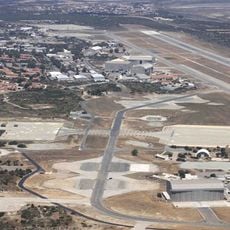
The name Aetokremnos means "Cliff of the Eagles" in Greek. The roughly 1,000 flint tools, including thumbnail scrapers of Mesolithic type, resemble those made by the Natufian culture of the Levant. The site lies on a British Royal Air Force base and is not open to visitors.
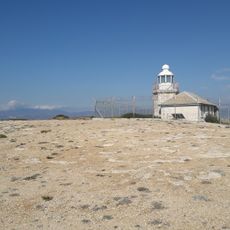
Aetokremnos lies inside a British Royal Air Force base near Limassol, so access is restricted and permission must be arranged in advance; it is not an open visitor site. The shelter sits about 40 m above the Mediterranean on a steep cliff, and only around 40 m² has been excavated. The ground is loose stone and rubble with low scrub, as in the photograph.
The site demonstrates that people crossed open water before agriculture was even invented, something scholars long thought impossible. This discovery forced archaeologists to completely reconsider what early humans were actually capable of doing.
The community of curious travelers
AroundUs brings together thousands of curated places, local tips, and hidden gems, enriched daily by 94,118 contributors worldwide.