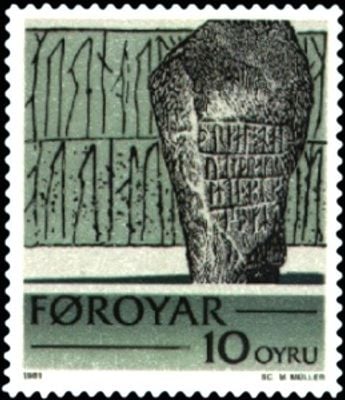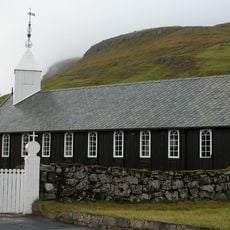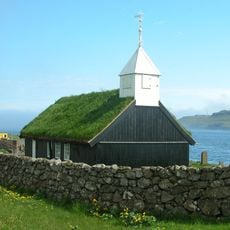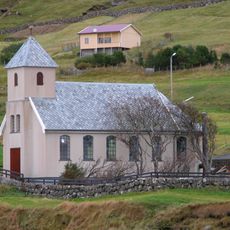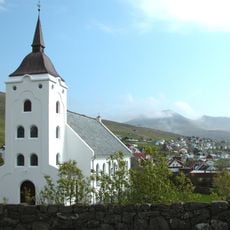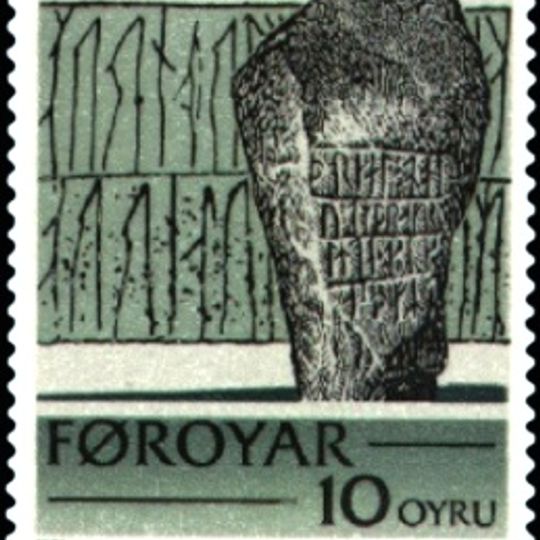
Sandavágur stone, Norse runestone in Sandavágur, Faroe Islands.
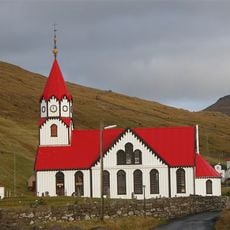
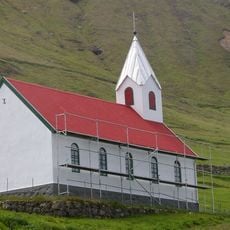
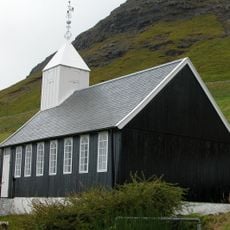
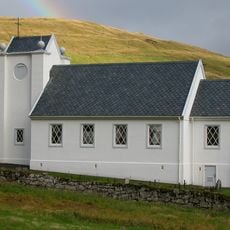
The Sandavágur stone is a medieval runestone in the Faroe Islands bearing carved inscriptions on its surface. It now rests inside Sandavágur Church, where it is protected from the elements.
The stone dates to the 13th century and records the name of Þorkell Ǫnundr, a Norwegian from Rogaland who settled in the islands. It was discovered in 1917 and documents the early link between Norwegian settlers and the Faroe Islands.
The stone bears runic inscriptions that document early Scandinavian settlement in the islands. Through these carved markings, visitors can see how settlers preserved their identity and connections to their homeland.
The stone can be viewed during church opening hours, with daylight providing the best conditions for observing the carved markings. Since the stone is housed in a church building, visitors should respect the space as a place of worship.
The inscription includes a specific reference to Rogaland in Norway, providing unusually detailed documentation of the settler's origin. This makes it a rare example that contains direct geographical references to the Norwegian homeland.
The community of curious travelers
AroundUs brings together thousands of curated places, local tips, and hidden gems, enriched daily by 92,597 contributors worldwide.