Baiturrahman Grand Mosque, Grand mosque in Banda Aceh, Indonesia
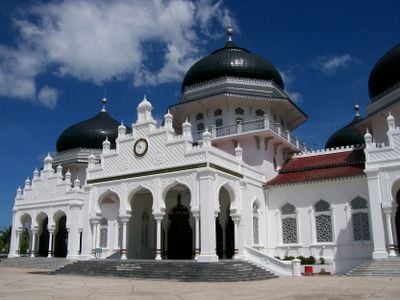
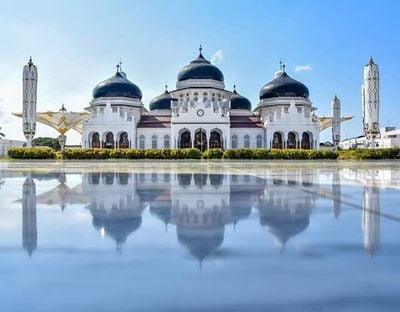
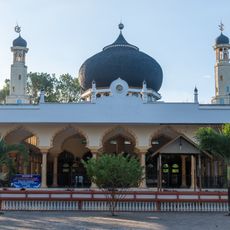
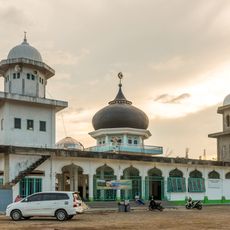
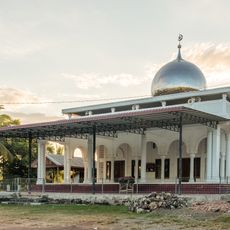
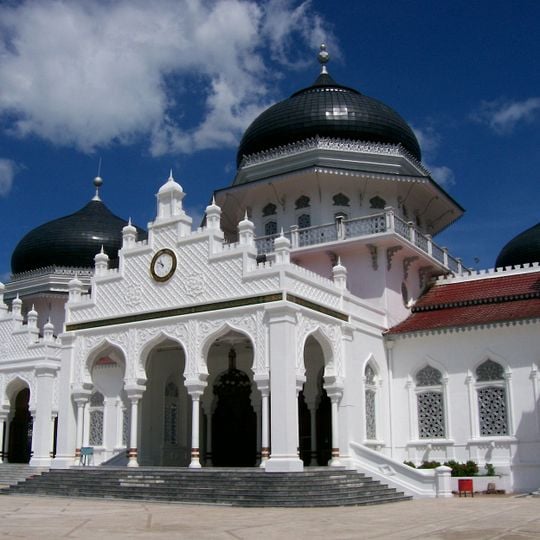
Baiturrahman Grand Mosque is a mosque in Banda Aceh, Indonesia, built in Mughal revival style with white walls and black onion domes covered in hardwood shingles. Its front section has a three-arched entrance porch with a round clock above the central arch, and a lower wing on the right carries a red-tiled roof and latticed arched windows. The interior holds a marble staircase and floor from China, stained-glass windows from Belgium and bronze chandeliers; the building stone came from the Netherlands.
The original royal mosque on this site dates to 1612 under Sultan Iskandar Muda, though some accounts place it in 1292 under Sultan Alaidin Mahmudsyah. On 10 April 1873 Dutch troops attacked the kraton, Acehnese fighters used the mosque as a base, and flares set its thatched roof alight. The Dutch rebuilt it from 1879, with the first stone laid by Tengku Qadhi Malikul Adil, and completed it on 27 December 1881 under Sultan Muhammad Daud Syah. Domes and minarets were added in 1935, 1958 and 1982.
The mosque serves as the primary religious center in Banda Aceh, hosting major Islamic celebrations and daily prayers for the local community.
Visitors should keep shoulders and knees covered and may need to wear provided robes if the dress code requires it. The complex opens early morning and closes in the evening, with prayer times being the busiest moments.
The 2004 tsunami cracked walls and slightly tilted and cracked the 35-metre minaret by the main gate, but the mosque stayed standing. It then served as a temporary shelter for displaced people and reopened for prayers only two weeks later.
The community of curious travelers
AroundUs brings together thousands of curated places, local tips, and hidden gems, enriched daily by 92,653 contributors worldwide.