Gunung Soputanpatepangan, Stratovolcano in Minahasa Regency, Indonesia
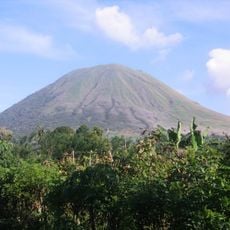
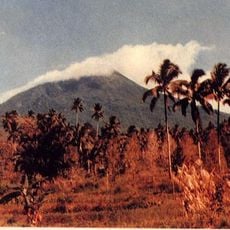
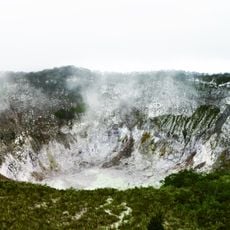
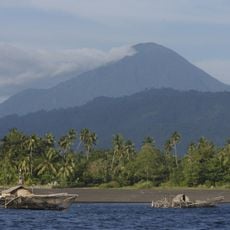
Soputan is a stratovolcano on the northern arm of Sulawesi, rising to 1,785 m on the southern rim of the Tondano caldera. Its geologically young cone is mostly unvegetated and built of andesite and basalt. Eruptions come from the summit crater and from Aeseput, a vent on the north-east flank formed in 1906.
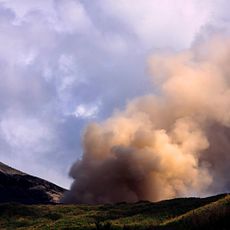
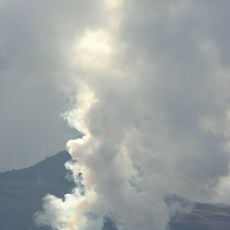
Soputan's earliest recorded eruption dates to 1450, followed by confirmed events in 1785, 1819, 1833, 1845 and 1890. The Aeseput vent on the north-east flank formed during the 1906 eruption. Activity has continued into recent decades, including pyroclastic flows 4 km downslope on 6 June 2008 and ash columns over 6,000 m in October and December 2018.
Villagers on the volcano's slopes quarry its lava rock and volcanic sand for building houses and other structures, so the mountain is a working source of construction material as well as a landmark. Its eruptions can blanket the area as far as Manado, roughly 50 km to the north-east, and disrupt domestic and international flights.
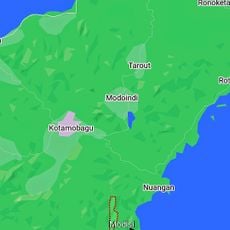
Soputan rises about 50 km southwest of Manado, near Tombatu in Southeast Minahasa. Eruptions can send ash over Manado and disrupt domestic and international flights, so check the volcano's status and any exclusion zone before setting out. The summit cone is mostly bare of vegetation.
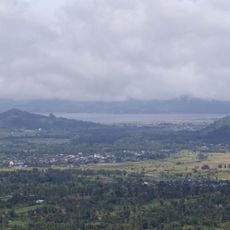
The mountain sits on the southern edge of the Tondano caldera, offering views of Tondano Lake and Gunung Klabat on clear days. This location makes it a vantage point for observing the broader volcanic landscape of the region.
The community of curious travelers
AroundUs brings together thousands of curated places, local tips, and hidden gems, enriched daily by 92,815 contributors worldwide.