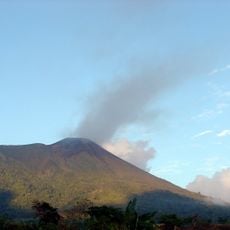
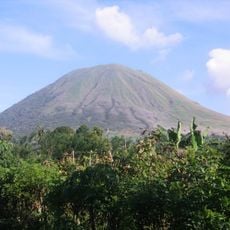
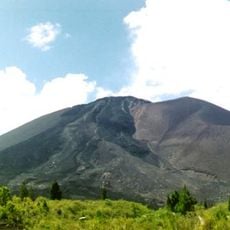
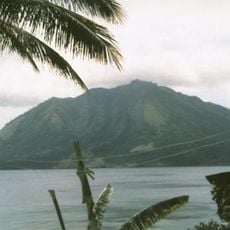
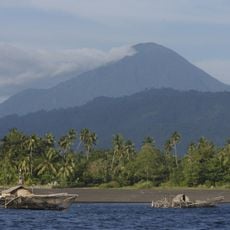
Mount Mahawu, Stratovolcano in North Sulawesi, Indonesia.
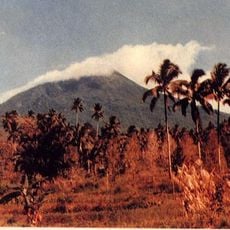
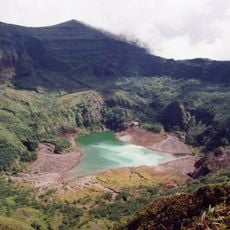
Mount Mahawu is a stratovolcano in North Sulawesi, Indonesia, with a crater roughly 180 meters wide and 140 meters deep at its summit. Inside, a yellowish sulfur pond sits on the crater floor, fed by gases that continuously rise from fissures below.
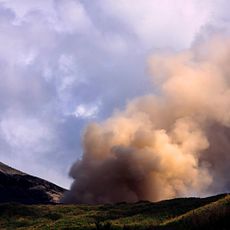
A small explosive eruption was recorded at Mahawu in 1789. In 1994, fumaroles, mudpots and small geysers were observed along the greenish shore of the crater lake, with further activity in 1999. The Minahasa name Mahawu refers to the ash the mountain often released; it is also called Roemengas.
The Minahasa name Mahawu comes from the mountain's habit of releasing ash, and it is also called Roemengas. Most people around the slopes work as farmers, growing vegetables up to the middle of the mountain, and the Sangihe honeybird, endemic to Sulawesi, can be seen near the summit.
A paved path connects the parking area to the crater rim, and the round trip on foot takes about one hour. Sulfur fumes near the edge can be strong on still days, so bringing a face mask is a good idea.
The crater lake's greenish shore is where fumaroles, mudpots and small geysers were observed in 1994, with further activity in 1999. The lake is now smaller because part of its rim has dried out. Minahasa people call the mountain Mahawu because it often gives off ash; they also know it as Roemengas.
The community of curious travelers
AroundUs brings together thousands of curated places, local tips, and hidden gems, enriched daily by 92,784 contributors worldwide.