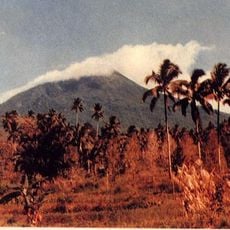
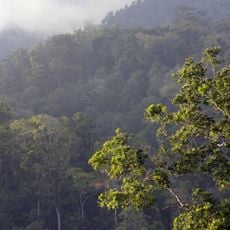
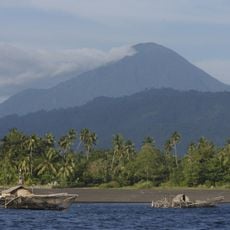
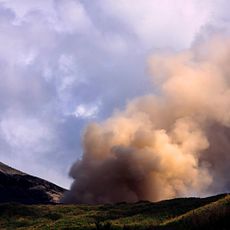
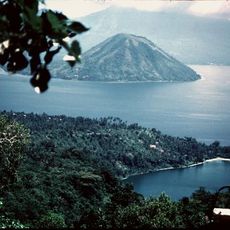
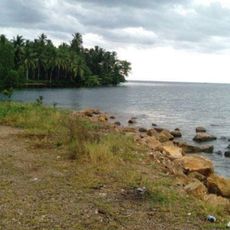
Mount Tondano, Active volcano in North Sulawesi, Indonesia.
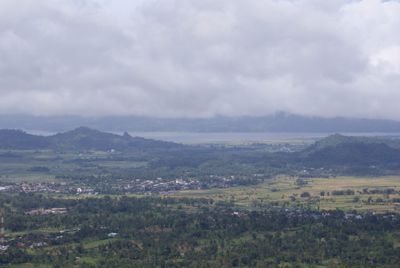
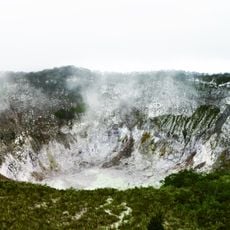
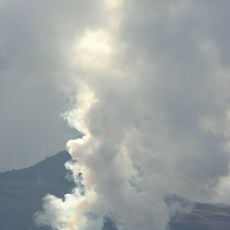
Mount Tondano is a volcano in North Sulawesi whose caldera measures 20 by 30 km, formed by a massive eruption in the Late Miocene or Early Pliocene. Pyroclastic cones, obsidian flows and geothermal areas lie within it, and Lake Tondano sits on the eastern side of the caldera. The smaller 5 by 3.5 km Pangolombian caldera lies entirely inside it.
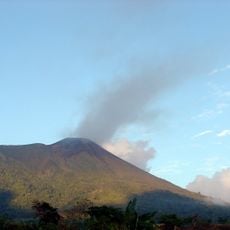
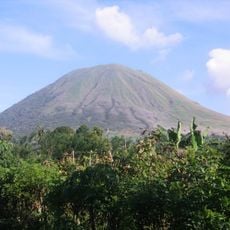
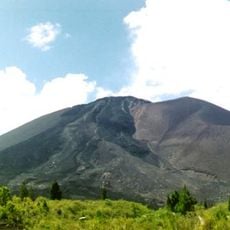
The 20 × 30 km Tondano caldera formed in the Late Miocene or Early Pliocene through a massive eruption. Post-caldera activity built pyroclastic cones and obsidian flows and left geothermal areas within the depression. Later, the somma volcanoes Soputan, Sempu, Lokon-Empung and Mahawu grew along the caldera rim, with Soputan the youngest and most frequently active.
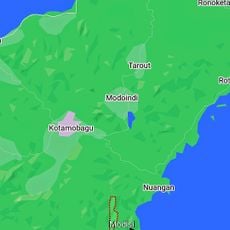
The name Tondano is shared by the caldera, the town of Tondano on its shore and Lake Tondano, which fills the eastern side of the depression. The caldera's geothermal areas are being studied as a possible source of clean energy for the growing population of northern Sulawesi.
Lake Tondano lies on the eastern side of the caldera, not the western; the rim is ringed by the somma volcanoes Soputan, Sempu, Lokon-Empung and Mahawu. The caldera floor holds pyroclastic cones, obsidian flows and geothermal areas, so plan routes around the hot ground and take a local guide. Access is from the towns around the lake, including Tondano city.
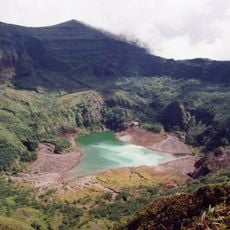
The 5 km long and 3.5 km wide Pangolombian caldera lies entirely within the Tondano Caldera, formed by a large eruption of an older somma volcano. Its ellipsoidal outline is a separate collapse structure from the main 20 × 30 km caldera, so two nested depressions sit inside one another.
The community of curious travelers
AroundUs brings together thousands of curated places, local tips, and hidden gems, enriched daily by 92,890 contributors worldwide.