Gaiety Theatre, Isle of Man, Art Nouveau theatre in Douglas, Isle of Man.
The Gaiety Theatre and Opera House stands on Harris Promenade in Douglas, its entrance facade with an upstairs loggia, pedimented towers and stucco decoration modelled on Italian Renaissance buildings. Inside Frank Matcham's 1899 design, a dome with a stained glass ceiling sits above the stalls, and ceiling paintings and plasterwork combine Baroque and Elizabethan elements.
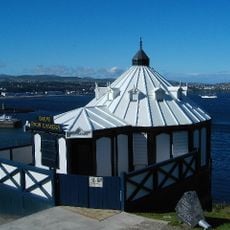
The site first held the Marina, a barrel-vaulted hall that opened in April 1893 and closed after three months when its company went bankrupt; it reopened in 1894 as the Pavilion. In 1899 the owners hired Frank Matcham, who extended the stage by 42 ft (12.8 m) and added a third level. The theatre opened on 16 July 1900 with the West End production "The Telephone Girl" starring Ada Blanche.
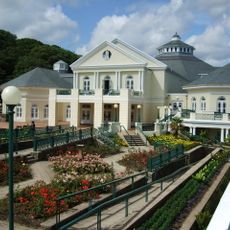
The theatre's name comes from the Gaiety, the variety entertainment style popular when it opened in 1900. Local companies and touring productions of musicals, drama and opera still perform here, and since 2000 it has formed the VillaGaiety complex with the nearby Villa Marina, a 1,620-seat auditorium.
Guided tours are available on Saturdays during warmer months and offer a detailed look at the building's architecture. The venue sits right on the seafront promenade and is easily reached on foot.
The Gaiety holds the only working Corsican Trap in the world, built for a centenary performance of The Corsican Brothers on 16 July 2000. The device raises an actor through the stage floor while moving him sideways, and the theatre also keeps a working Victorian Act Drop painted with a dancing lady.
The community of curious travelers
AroundUs brings together thousands of curated places, local tips, and hidden gems, enriched daily by 93,067 contributors worldwide.