Vatican Hill, Sacred hill in Vatican City, Italy
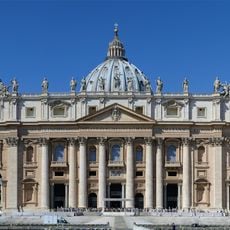
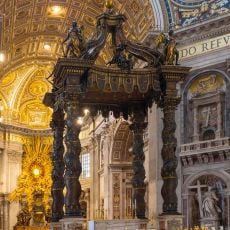
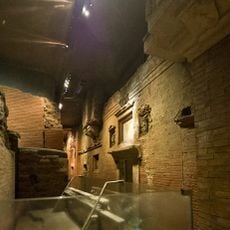
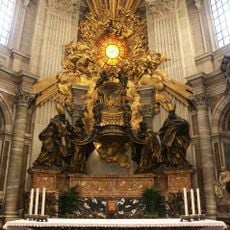
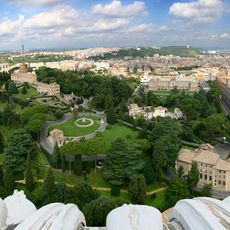
Vatican Hill is a tuff hill on the right bank of the Tiber, opposite Rome's seven hills, rising 75 metres within Vatican City. Its slope was cut back under Constantine to raise the first St. Peter's Basilica over a Roman cemetery; below the present basilica, the Vatican Necropolis preserves those tombs.
The plain between the hill and the Tiber, the ager Vaticanus, held the Circus of Nero, where St. Peter was martyred under Nero in 64 or 67 and buried in a nearby cemetery. Constantine had part of the hill cut away to raise the first St. Peter's Basilica over the tomb around 326. Pope Leo IV enclosed the hill within Rome's walls between 848 and 852.
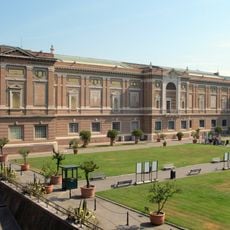
The name Vatican probably comes from an Etruscan settlement, Vatica or Vaticum, in the vaticanus ager; Varro instead linked it to Deus Vaticanus, the god of an infant's first cry. Pilgrims of many nations once had their own scholae on the hill, with lodgings, chapels and cemeteries. The Phrygianum, a sanctuary of Cybele and Attis, stood here; altars found during the 1608/09 rebuilding of St. Peter's are now in the Vatican Museums.
The hilltop is enclosed by walls and forms the territory of Vatican City, so access follows the Vatican Museums and St. Peter's Basilica. The Leonine Wall, begun under Leo IV between 848 and 852, still partly stands. The Vatican Necropolis lies beneath the basilica; the nearby cemetery opened to the public on 10 October 2006.
The hill is made of tuff, and its top reaches 75 metres, the highest point in Vatican City. Part of the slope was cut away under Constantine to raise the first St. Peter's Basilica over the grave attributed to the apostle in 326. The Cybele sanctuary on the hill was so well known that Mainz-Kastel named its own shrine after it.
The community of curious travelers
AroundUs brings together thousands of curated places, local tips, and hidden gems, enriched daily by 92,632 contributors worldwide.