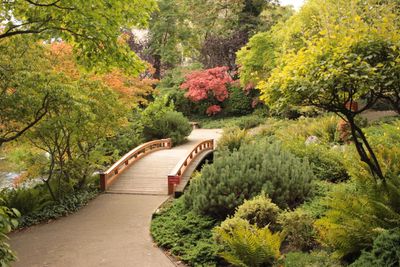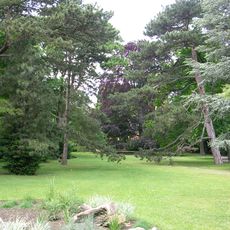
Setagayapark, Japanese garden in Döbling district, Vienna, Austria.
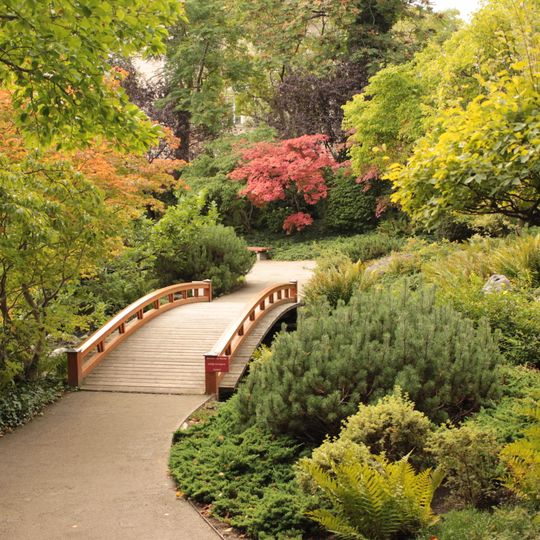
Setagayapark is a Japanese garden in Vienna's Döbling district featuring multiple ponds, stone sculptures, bamboo gates, and a tea house arranged across different landscape levels. The space covers approximately 4,700 square meters (50,600 square feet) and skillfully combines water, stone, and vegetation into a unified composition.
The garden was laid out from 1990 to 1992 to plans by the Japanese garden designer Ken Nakajima (1914–2000) and ceremonially opened in May 1992. It grew out of a friendship and cultural agreement between Döbling and Tokyo's Setagaya district dating from 1984/85; other sources link it to the 120th anniversary of the Austrian-Japanese friendship treaty of 1869. A Japanese garden on the Heinrichshügel green space had already been envisaged in 1988.
The garden displays traditional Japanese design elements like stone lanterns, waterfalls, and carefully placed rocks that guide the eye and create a sense of balance. Visitors experience how Japanese philosophy approaches harmony between people and nature through the arrangement of natural materials.
The garden is closed from 1 December to the end of February and during wintry conditions. From 1 March to 30 November it opens daily at 7 AM, closing at 6 PM in March, 8 PM in April and September, 9 PM from May to August, 7 PM in October and 5 PM in November. Dogs are not allowed. A barrier-free entrance exists beside the main entrance in the southwest corner.
Beside the main entrance stands a stone monument inscribed Furō-mon 不老門, "Gate of Eternal Youth", read as the entrance to paradise. The path rising beyond it stands for the course of life, and the bridges bring the visitor closer to paradise, represented by the pergola. Parts of the park, including the tea house, pagoda and stone lantern, were gifts from Setagaya and its former mayor Keiji Ohba.
The community of curious travelers
AroundUs brings together thousands of curated places, local tips, and hidden gems, enriched daily by 93,453 contributors worldwide.