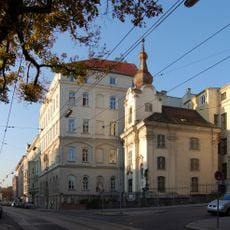
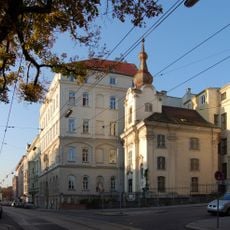
Villa Hohe Warte, Municipal orphanage in Döbling, Austria
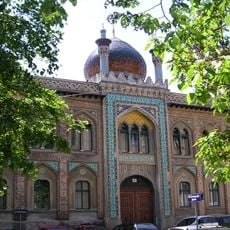
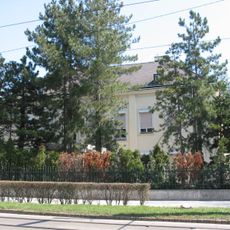
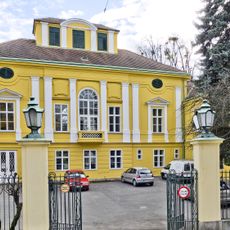
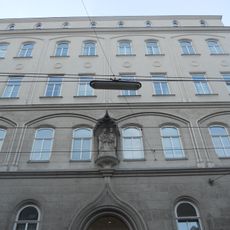
Villa Hohe Warte is a six-story orphanage built in 1907/08 by the City of Vienna at Hohe Warte 1–3 in Döbling. Three architects from the city building office—Eduard Lasch, Josef Pürzl and Julius Fröhlich—gave it baroque-Secessionist details and an Ehrenhof-like layout with an east and west wing. Large apartments of at least 150–200 m² sat at the end of each wing, reached by a grand staircase and a long corridor, with three separate classrooms attached to each wing.
Vienna's municipal building office erected the sixth city orphanage here in 1907/08, designed by Eduard Lasch, Josef Pürzl and Julius Fröhlich with Baroque-Secessionist details around a courtyard. In summer 1946 it became a Rädda Barnen children's home, opened on 22 September 1946 by Margit Levinson with Mayor Theodor Körner present. The six residential groups moved out in 1999, and after a 2008 squat the building was sold in 2013 for 21 million euros.
After World War II, a Swedish aid organization ran the facility to house young children in need of care. The place reflected a commitment to providing shelter for vulnerable children during difficult times.
The grounds feature parks, sports facilities, and parking areas that make it a complete complex. The location sits within an established residential area accessible by public transportation.
The 2019 renovation was meant to prepare the building for use as a "UN embassy China" from 2020, but the sources do not confirm that this mission ever opened. Before the sale, on 11 and 12 July 2008, activists occupied the vacant villa to demand a self-managed housing project and an open social and cultural centre.
The community of curious travelers
AroundUs brings together thousands of curated places, local tips, and hidden gems, enriched daily by 94,019 contributors worldwide.