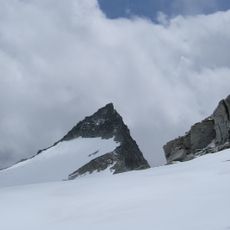
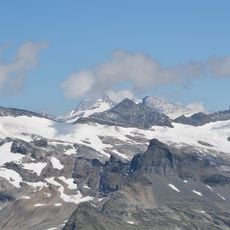
Zentralgneis, Geological formation in Tyrol and South Tyrol, Austria.
Zentralgneis is the name for the orthogneisses forming the tectonically lowest unit of the Tauern Window in the Eastern Alps, the so-called central gneiss cores. The rock is a metamorphosed granite, and its schistosity is often only weakly developed, so it was long called "Zentralgranit". The cores are named after mountain groups, from the Tux core in the west to the Gößgraben core in the east.
The granites that became Zentralgneis intruded older cover rocks during the late Carboniferous to early Permian. Their metamorphism into orthogneiss occurred during the Alpine orogeny, not in the Carboniferous and Permian. The gneisses form the tectonically deepest unit of the Tauern Window, which is why they are also called Zentralgneiskerne.
The name "Zentralgranit" was used historically for these rocks because the schistosity imposed by metamorphism is only partly distinct, echoing the true granite of the Aarmassiv and Gotthardmassiv in Switzerland. The individual cores are named after mountain groups, from the Tuxer-Kern in the west to the Gößgraben-Kern in the east.
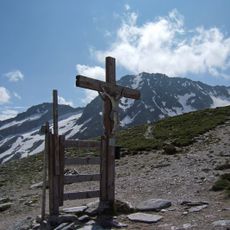
Numerous marked hiking trails provide access to the formation, particularly around the Hohe Tauern Window and surrounding mountain areas. The best time to explore is during warmer months when trails are snow-free and easy to walk.
The rock shows traces of two distinct mountain-building phases, revealing its complex geological past. Hikers can directly observe these layered structures exposed in the mountain faces along the trails.
The community of curious travelers
AroundUs brings together thousands of curated places, local tips, and hidden gems, enriched daily by 93,599 contributors worldwide.