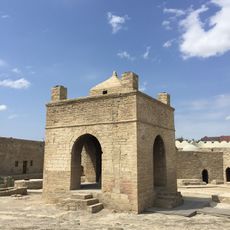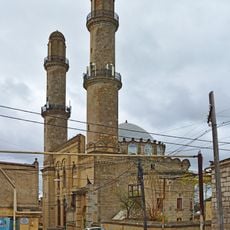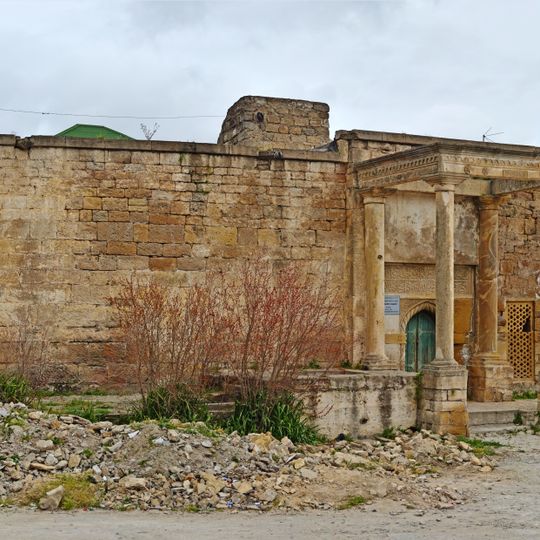
Nizameddin Mosque, Islamic mosque in Əmircan, Baku, Azerbaijan.
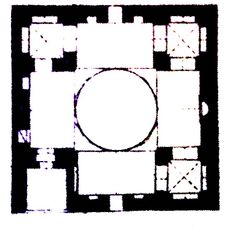
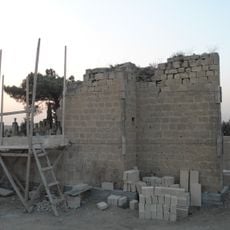
The Nizameddin Mosque is a 14th-century former mosque in the Amirjan settlement of Baku, built of cut white limestone. Its prayer hall measures 24 by 6 metres and rises 5 metres, with 1-metre-thick walls and a 6-metre dome reaching 7.5 metres from the floor. The building has no minaret, and three of its four entrance gates carry stone inscriptions.
The mosque was built in 730 AH (1329/1330 CE) under the Shirvanshahs by Amir Nizamaddin Kesrani, whose name it bears. In 1384–1385 Sharafeddin added a new portal in the southern courtyard, and restorations followed in 1830–1831 under the master Suleyman and in 1876 under Fatma Khanim, daughter of Haji Rasul. Closed after the Soviet anti-religious campaign, it was listed as a national monument on 2 August 2001 and restored in 2020.
The village of Amirjan takes its name from Emir Nizamaddin Amirhaj, son of Fakhraddin, who built the mosque in 730 AH (1329/1330). The historian Sara Ashurbeyli identified him as a major feudal lord who owned the settlement. The mosque is now closed and state-protected, so the building is visited as a monument rather than for prayer.
The former mosque is closed and protected by the state, so visits are limited to the exterior. It stands in the Amirjan settlement of Baku's Surakhani district, on a rock surface with a cellar beneath; the cellar was sealed after 1920. Look for the stone inscriptions above the three of the four entrance gates that carry them.
It is one of roughly 120 Islamic places of worship in Baku, reflecting the variety of religious sites across the city. The mosque represents the long-lasting tradition of this particular architectural school across many centuries.
The community of curious travelers
AroundUs brings together thousands of curated places, local tips, and hidden gems, enriched daily by 93,797 contributors worldwide.