National Museum of Bosnia and Herzegovina, National museum in Sarajevo, Bosnia and Herzegovina.
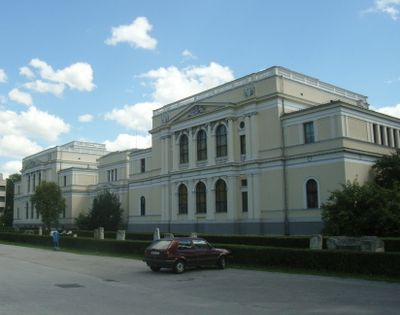
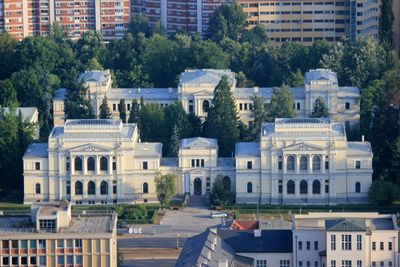
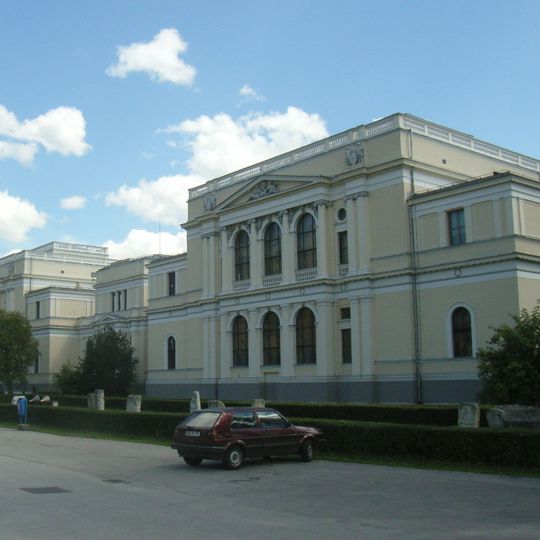
The National Museum of Bosnia and Herzegovina in Sarajevo consists of four symmetric pavilions in Italian Renaissance Revival style, designed by Karel Pařík and completed in 1913. The pale yellow stone buildings, each topped by a triangular pediment and shallow domed roof, enclose a courtyard that serves as a botanical garden. The garden displays mostly relocated stećaks, medieval tombstones. The pavilions house archaeology, ethnology, natural history, and a library.
The idea of a museum was raised in 1850 under Ottoman rule, but the institution was only founded on 1 February 1888 by the Austro-Hungarian administration, with Kosta Hörmann as its first director. Its collections outgrew the original premises, and a purpose-built museum designed by Karel Pařík opened on 4 October 1913. The building was damaged by shelling in the 1992–95 war, and the museum closed from 2012 to 2015 over funding disputes.
The collections display how people from different communities in the region dressed, worked with their hands, and lived through daily life across centuries. These objects show the ways various groups shaped their surroundings and traditions.
The museum is open several days throughout the week, with visiting hours that differ between weekdays and weekends. Plan to spend enough time here since the four-pavilion layout makes it easy to move between sections and explore different areas at your own pace.
The courtyard garden holds mostly relocated stećaks, the carved medieval tombstones found across Bosnia and Herzegovina, set among plants around which the four pavilions are arranged. Look for their relief carvings of figures, hands and crosses. The museum is the only building in southeastern Europe purpose-built as a museum.
The community of curious travelers
AroundUs brings together thousands of curated places, local tips, and hidden gems, enriched daily by 93,364 contributors worldwide.