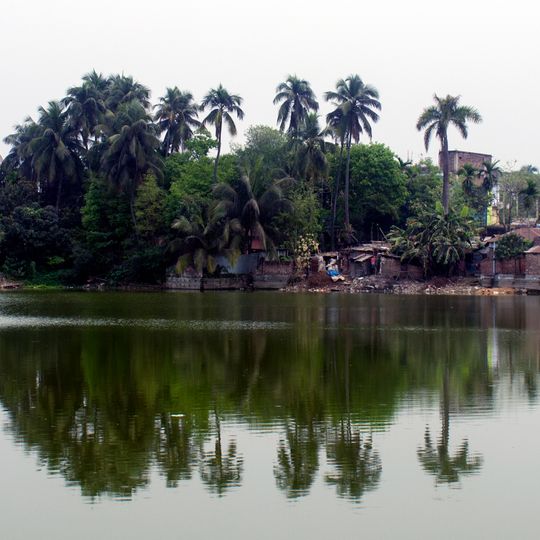
Puthia Temple Complex, Hindu temple complex in Puthia, Bangladesh
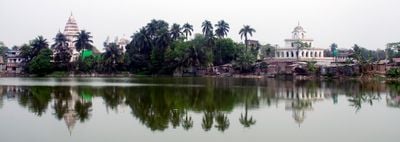
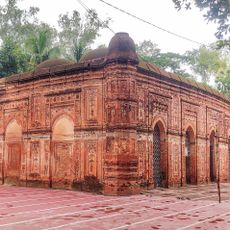
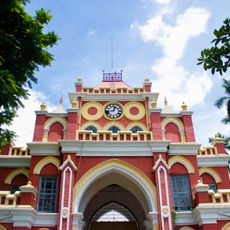
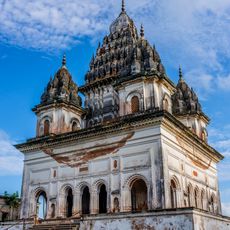
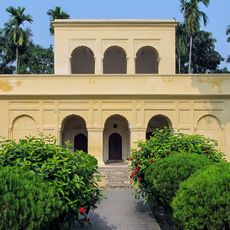
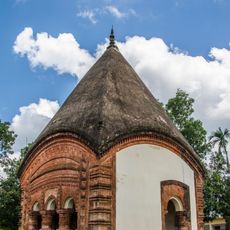
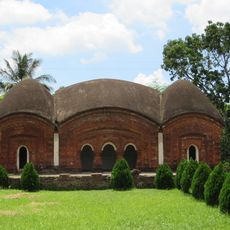
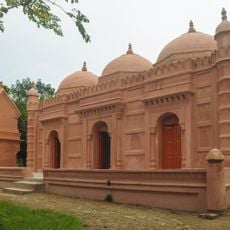
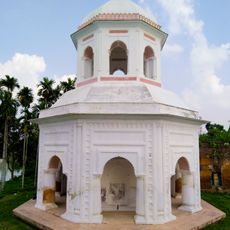
Puthia Temple Complex is a cluster of Hindu temples in Puthia, Rajshahi District, Bangladesh, built from brick and stone with terracotta ornamentation. The tallest structure, the Bhubaneshwar Shiva Temple, has a five-spire tower whose central pinnacle is made of 108 sub-pinnacles and whose corner pinnacles each have 17. The complex also includes the two-storey octagonal Jagannath Temple and the Char Chala Chauchala Chhota Govinda Mandir, whose southern frontage is covered with terracotta plaques.
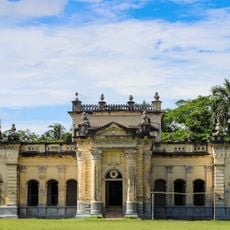
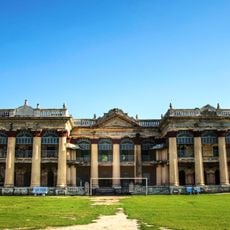
The Puthia Raj family was founded by Bhatsacharya, a 16th-century holy man whose son Pitambar received the Lashkarpur estate from Raja Man Singh; his son Nilambar was later titled Raja by Emperor Jahangir. The family became the second-largest zamindary in British Bengal. The temples were built by these Hindu zamindars, with the Bhubaneshwar Shiva Temple erected in 1823 by Rani Bhubonmoyee Devi and the Pancha Ratna Govinda Temple built between 1823 and 1895. After partition, the zamindary was abolished and the family migrated to India.
The temples serve as active places where Hindus gather for worship and religious celebrations throughout the year. The buildings show how faith shaped the artistic choices of those who built and decorated them over centuries.
The temples are open during daylight hours, and the best light for viewing the decorations comes mid-morning through afternoon. Wear comfortable walking shoes as you will spend time moving between the different buildings and grounds.
The Bhubaneshwar Shiva Temple's central pinnacle is made up of 108 smaller pinnacles, and each of its four corner pinnacles has 17. Inside lies a black basalt Shiva Linga, the largest in Bangladesh, which Pakistani soldiers tried but failed to move during the 1971 Liberation War.
The community of curious travelers
AroundUs brings together thousands of curated places, local tips, and hidden gems, enriched daily by 93,375 contributors worldwide.