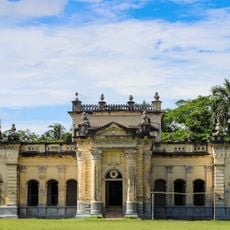
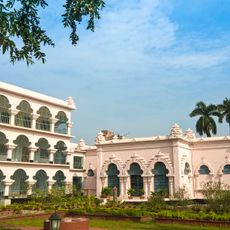
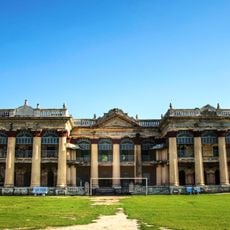
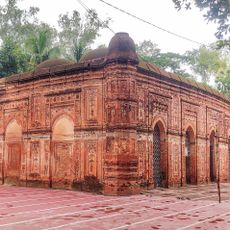
Pancha Ratna Shiva Temple, Hindu temple in Rajshahi District, Bangladesh.
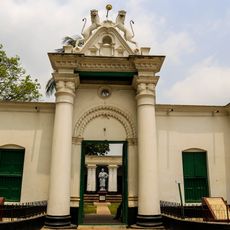
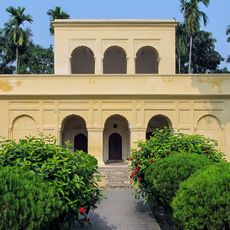
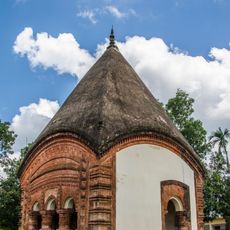
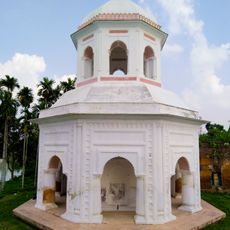
Pancha Ratna Shiva Temple, also called Bhubaneswar Shiva Mandir, is a brick temple with a plaster finish and no terracotta ornamentation, standing on a raised platform 3.55 m high at the entrance of the Puthia Rajbari. Its plan is 20 m square, with a 4.04 m square central sanctum enclosed by a passage running on all four sides. Five spires, each made of smaller beehive-shaped pinnacles, crown the structure, and two brick stairways, from the north and south, lead up to the platform.
Rani Bhuban Mayi Devi, widow of Raja Jagat Narayan Ray, is credited with building the temple between 1823 and 1830, at an estimated cost of three million taka. It is also called Bhubaneswar Mandir after her. The temple is a protected monument of the Department of Archaeology.
The temple serves as a gathering place during major Hindu festivals, where worshippers come to offer prayers and perform rituals honoring Shiva. Local communities continue practices that have been part of this site for centuries.
The temple stands at the entrance of the Puthia Rajbari, 32 km by road from Rajshahi city, which is also a rail head on the Dhaka–Rajshahi Highway. The raised platform is reached by two brick stairways, one from the north and one from the south. Entry into the central sanctum is not allowed without permission from the temple authorities.
During the 1971 Liberation War, Pakistani forces tried to dislodge and break the black basalt Shiva Linga in the sanctum, but could not move it; it remains the largest Shiva Linga in Bangladesh. The temple walls carry plaster panels with Hindu mythological themes, now largely damaged.
The community of curious travelers
AroundUs brings together thousands of curated places, local tips, and hidden gems, enriched daily by 93,375 contributors worldwide.