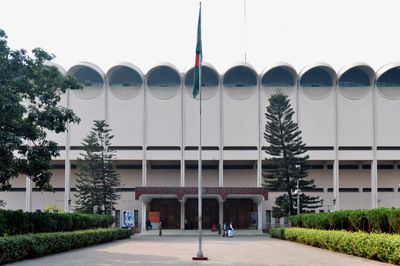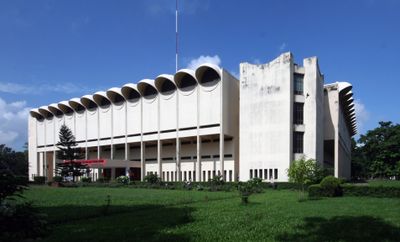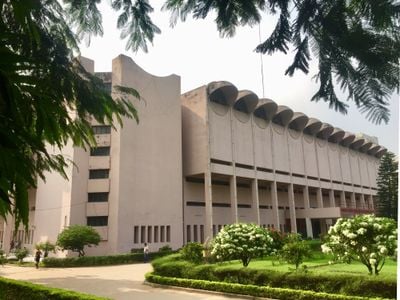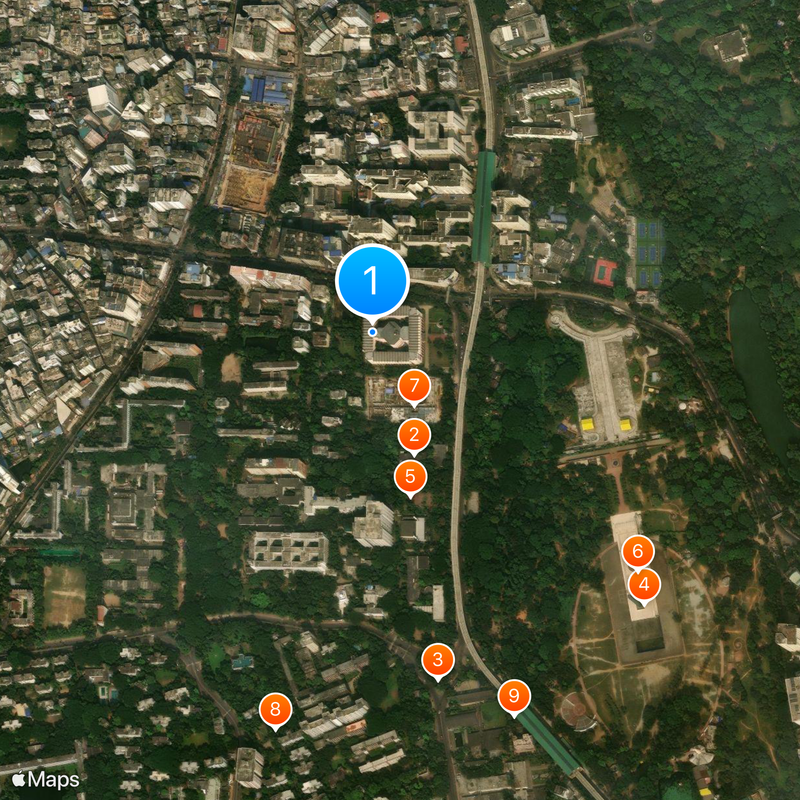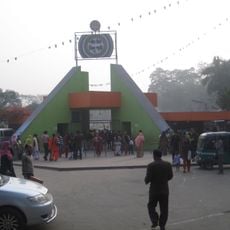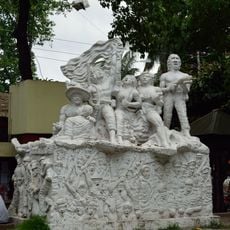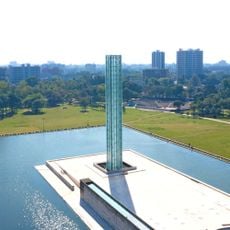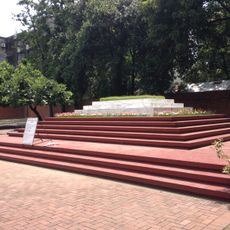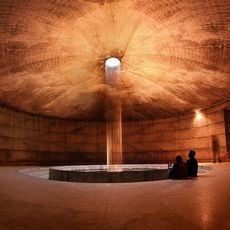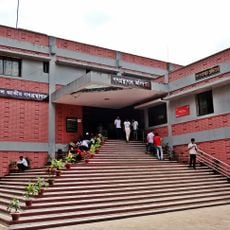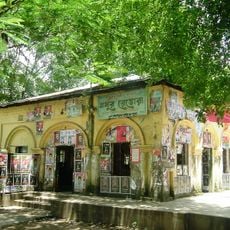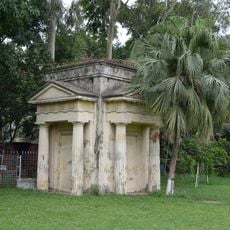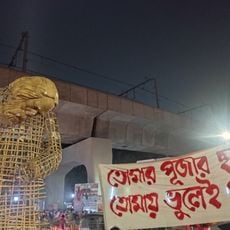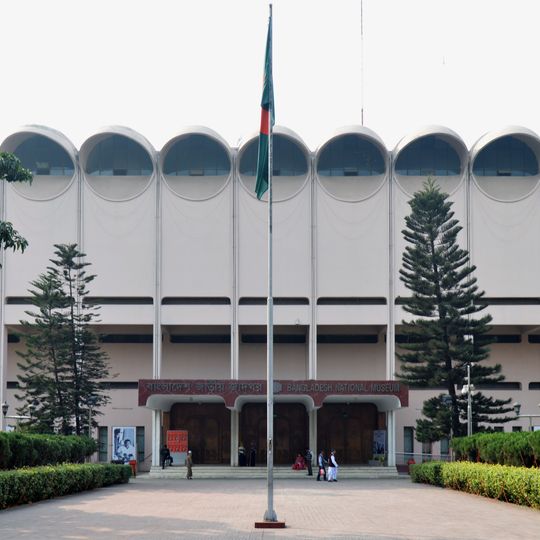
Bangladesh National Museum, National history museum in Shahbag, Bangladesh.
The Bangladesh National Museum is a history museum in Shahbag, Dhaka, with galleries devoted to natural history, classical art, and ethnology. The collection spreads across multiple floors and presents archaeological finds, coins, sculptures, and manuscripts from different periods.
The institution opened in 1913 as the Dacca Museum and was declared a national museum in 1983. Over the following decades the collection grew to document contemporary events as well.
The name reflects the country's foundation after independence in 1971, while classrooms and study groups regularly visit the halls to learn about the region's past. Visitors see textiles, ceramics, and religious objects that reveal everyday life across different regions.
The halls are organized by theme and can be visited in any order, with orientation boards on each floor to help you navigate. A full visit takes between one and three hours depending on your interest.
A large sculpture of a royal Bengal tiger greets visitors in the entrance area and serves as a popular photo spot. A dedicated hall displays documents and photographs from the 1952 Language Movement, which led to the recognition of Bengali.
Location: Shahbag
Inception: 1913
Official opening: August 7, 1913
Accessibility: Wheelchair accessible
Operator: Bangladesh Government
Address: Shahbag, Dhaka-1000
Phone: +8801552375647
Email: dgmuseum@yahoo.com
Website: http://bangladeshmuseum.gov.bd
GPS coordinates: 23.73755,90.39410
Latest update: December 5, 2025 22:27
Public squares across Asia combine historical significance with contemporary urban life. These spaces have served as centers for commerce, political gatherings and social events for centuries, reflecting the cultural evolution of their regions. Visitors encounter monuments symbolizing national identity, religious sites preserving spiritual traditions, and architecture spanning from imperial dynasties to the present day. Notable examples include Tiananmen Square in Beijing, one of the world's largest public plazas, and Naqsh-e Jahan Square in Isfahan, a 17th-century masterpiece of Persian urban planning. In Kathmandu, Durbar Square showcases Newari architecture, while Gwanghwamun Square in Seoul merges modern urban design with historical references. Sultanahmet Square in Istanbul sits between Byzantine and Ottoman landmarks, and Rizal Park in Manila commemorates the Philippine independence movement. These squares remain active components of urban life, offering travelers opportunities to experience local customs, street markets and seasonal festivals.
Shaheed Minar
1.7 km
Mausoleum of Three Leaders
1.1 km
Ramna Kali Temple
947 m
Ramna Park
532 m
Teacher-Student Centre , University of Dhaka
735 m
Faculty of Fine Arts, University of Dhaka
218 m
Shoparjito Shadhinota
595 m
Swadhinata Stambha
648 m
Kakrail Mosque
961 m
Jagannath Hall
941 m
Mausoleum of Kazi Nazrul Islam
283 m
Museum of Independence
602 m
Central Public Library
142 m
Madhur Canteen
688 m
Old High Court Building, Dhaka
1.1 km
Shahbaz Khan Mosque
1.1 km
Moder Gorob
874 m
Salimullah Muslim Hall
971 m
National Art Gallery
1.1 km
Greek Memorial, Dhaka
689 m
Tagore sculpture controversy
590 m
St. Mary’s Cathedral, Dhaka
1.1 km
Rajosik Bihar
495 m
Jamuna State Guest House
766 m
Archbishop House
1.1 km
Supreme Court Residences
1.2 km
Mahangar Natya Mancha
721 m
Language Movement Museum
888 mReviews
Visited this place? Tap the stars to rate it and share your experience / photos with the community! Try now! You can cancel it anytime.
Discover hidden gems everywhere you go!
From secret cafés to breathtaking viewpoints, skip the crowded tourist spots and find places that match your style. Our app makes it easy with voice search, smart filtering, route optimization, and insider tips from travelers worldwide. Download now for the complete mobile experience.
A unique approach to discovering new places❞
— Le Figaro
All the places worth exploring❞
— France Info
A tailor-made excursion in just a few clicks❞
— 20 Minutes