Ensor House, Historic museum in Ostend, Belgium.
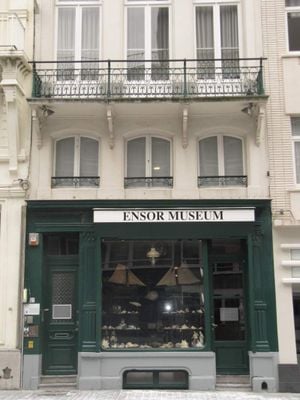
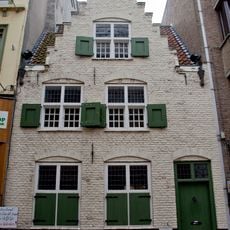
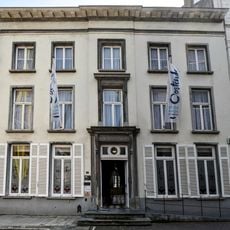
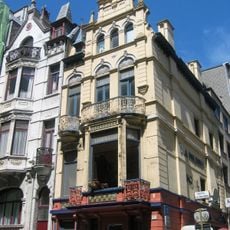
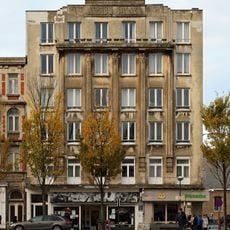
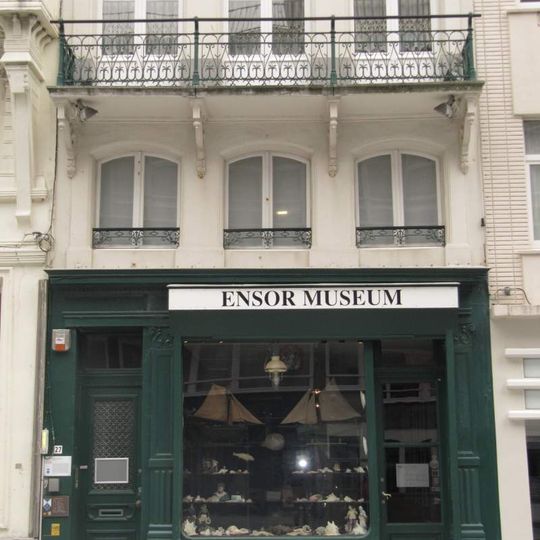
Ensor House is a narrow three-storey 19th-century townhouse at Vlaanderenstraat 27 in Ostend, where James Ensor lived and worked from 1917 until 1949. Its ground floor keeps the former souvenir shop of his uncle and aunt, with a dark green wooden storefront, a display window and a white sign reading "ENSOR MUSEUM"; above are three tall windows with black iron railings and a wider balcony railing. The first floor holds the Blue Salon, used as dining room, reception room and studio, with original furniture and full-size reproductions of works such as the 1888 Intrede van Christus in Brussel. The renovated museum, reopened in 2020, spreads over five rooms.
Ensor moved into the residence in 1917 and spent his final decades there developing his artistic practice. The house became a center of artistic activity during this period, recording an important chapter in Belgian modernism.
The ground floor keeps the shell and souvenir shop of Ensor's uncle Leopold Haegheman and aunt Pauline Dewinter, selling shells, postcards, toys and carnival masks; Ensor closed it but left the fittings untouched in memory of his relatives. A photo shows the shop as it once looked. Upstairs, the Blue Salon served as dining room, reception room and studio, with his easel and a poster for his 1898 "La Plume" exhibition.
The house is centrally located in Ostend and easily accessible by car or public transport. The spaces span multiple levels, so allow adequate time for your visit and wear comfortable shoes for exploring.
The ground-floor shop that Ensor inherited from his uncle Leopold Haegheman and aunt Pauline Dewinter sold shells, souvenirs, toys and carnival masks. Ensor closed the shop but left its fittings untouched in memory of his deceased relatives; a photograph shows how it once looked.
The community of curious travelers
AroundUs brings together thousands of curated places, local tips, and hidden gems, enriched daily by 93,993 contributors worldwide.