Kasteel Wijnendale, Gothic Revival castle and museum in Torhout, Belgium
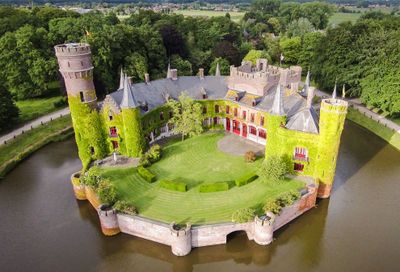
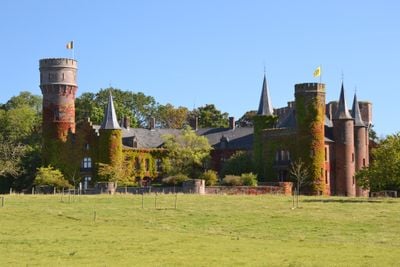
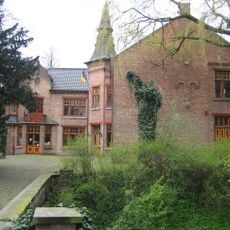
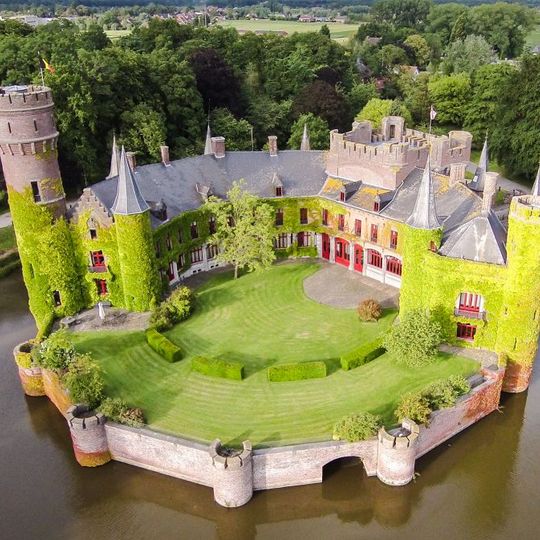
Kasteel Wijnendale is a moated castle in Torhout with an inhabited north wing from the 15th century and extensive rebuilding from the 19th century. The property combines medieval structures with later architectural additions that show different periods in its outer appearance.
Robert I, Count of Flanders, built the first castle at the end of the 11th century as a military base; it is first documented in Galbert of Bruges's diary in 1127. After passing to the Counts of Namur in 1298 and suffering sieges in 1302 and 1325, it was sold in 1407 to John the Fearless and rebuilt as a hunting residence by the Lords of Ravenstein. French troops blew up part of it in 1690, and after further damage in 1811 only ruins remained until Josse-Pierre Matthieu rebuilt it between 1837 and 1852.
The castle's name comes from the Wijnendale estate and lordship formed around 1278 by Guy of Dampierre. Philip of Cleves-Ravenstein turned it into a hunting lodge where he received princes; Philip the Handsome called it the finest country residence in Flanders. Since 1953 the owning family has borne the name Matthieu de Wynendaele.
Access by car is possible via Oostendestraat in Torhout, where the grounds are easy to reach. Visitors should note that the castle may not be available at certain times, so it is wise to check current opening conditions before visiting.
On 25 May 1940, days before the Dunkirk evacuation, King Leopold III met four cabinet ministers here, including Hubert Pierlot and Paul-Henri Spaak. With the country encircled by German troops, the king refused to follow his government to Britain and chose to stay with his army, a decision that led to his abdication in 1951.
The community of curious travelers
AroundUs brings together thousands of curated places, local tips, and hidden gems, enriched daily by 93,550 contributors worldwide.