Coal Mine of Zolder, coal mine in Limburg, Belgium
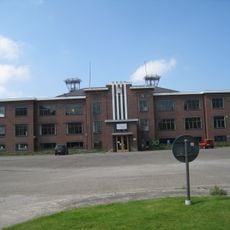
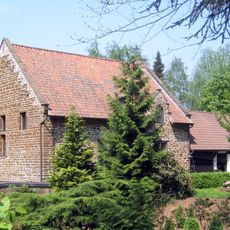
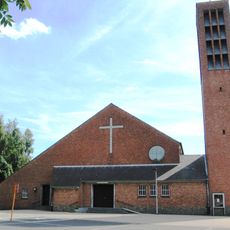
The Coal Mine of Zolder is a former coal mine in Heusden-Zolder, Belgium, that operated from 1930 until 1992. Its red-brick buildings with arched windows and stepped gables line up along the site, and behind the roof rises the steel headframe of shaft II. A plain grey tower stands against the facade, and a dark canopy runs along the base.
André Dumont discovered coal in Limburg in 1901; the Helchteren-Zolder concession, the basin's largest at 70.06 km², was granted on 25 October 1906. Shaft sinking stalled for 23 years through wartime requisitions, wall collapses and flooding, and the first coal only came up in 1930. Zolder merged with Houthalen in 1964, peaked at 1.6 million tonnes in 1955 and 9,379 miners in 1964, and closed on 30 September 1992 as Belgium's last productive coal mine.
Every second and fourth Wednesday, the former miners' paydays, a multicultural market fills the new square on the site, known locally as the Turkish market. The mine drew Belgians and migrants from Central and Southern Europe from the start, and Turks and Moroccans after the 1956 Marcinelle disaster. Between 1913 and 1958 some 700 dwellings were built in phases in Berkenbos and Lindeman.
The site is accessible on foot and you can explore it alone or join guided tours to learn about the different structures. Wear good shoes since the paths cross uneven ground and some buildings have stairs to climb.
Only shaft II's steel headframe survives; shaft I was filled in. In 1957 skips replaced the four-storey cages there, lifting 1,200 tonnes an hour, nearly double the old capacity. The mine's deepest working level lay at 900 metres, reached by inclined galleries.
The community of curious travelers
AroundUs brings together thousands of curated places, local tips, and hidden gems, enriched daily by 94,393 contributors worldwide.