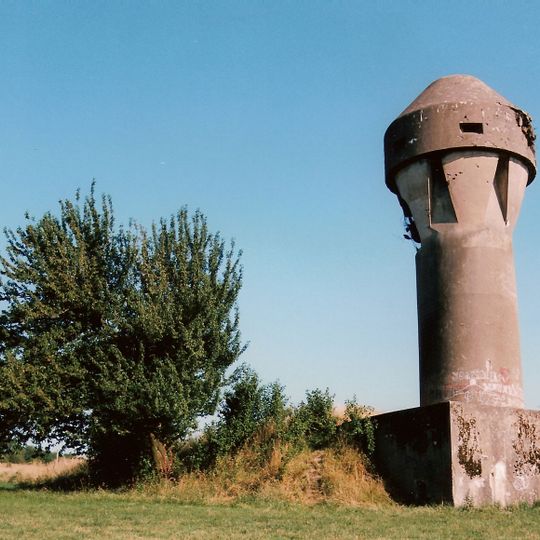
Fort de Boncelles, Military fortification in Boncelles, Belgium.
Fort de Boncelles is a military fortification in Belgium designed in a triangular shape with a base of 300 meters and sides of 235 meters. A deep perimeter ditch surrounds the entire structure as part of its defensive design.
Built between 1881 and 1884 to General Henri Alexis Brialmont's plans, Boncelles was one of twelve forts of the Fortified Position of Liège. On 6 August 1914 two companies of the German 74th Infantry Regiment attacked; repulsed three times in the nearby beet fields, about a hundred survivors waved a white flag. Bombarded from 14 August, the fort gave in as asphyxiating fumes from its own black-powder guns filled the galleries. Upgraded in the 1930s, it was bombed in May 1940, killing commandant Numa Charlier, and taken on 16 May.
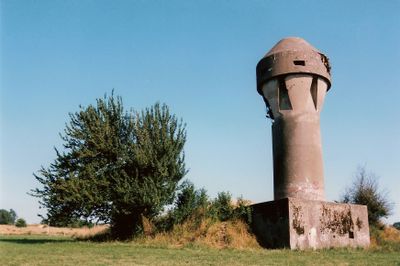
The fort is named after Boncelles, the Seraing district where it stands. Its observation posts FB2, FB3 and BE5 were part of a network whose codes used the first letters of the forts they linked, such as B.E. for Boncelles-Embourg. FB3 and BE5 are now included in the Chemin du Souvenir. A museum opened next to the fort at the end of 2012.
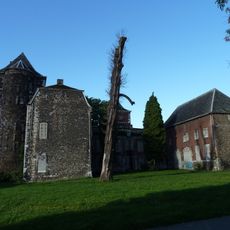
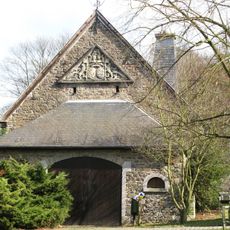
The fort is mostly buried and inaccessible, hemmed in by housing that follows the former ditch. Only the postern, central massif, air intake tower and two nearby bunkers remain. A museum opened next to the fort at the end of 2012; the site also holds a memorial to the dead of both World Wars and a small cemetery.
At the fort's center stood a fortified massif housing the main weapons, including 57mm guns positioned in casemates designed to defend the ditch. This central bastion exemplified the military engineering principles of its era.
The community of curious travelers
AroundUs brings together thousands of curated places, local tips, and hidden gems, enriched daily by 93,841 contributors worldwide.