Kelchterhoef, Nature area with multiple ponds in Houthalen-Helchteren, Belgium.
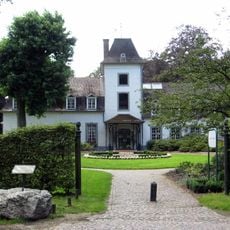
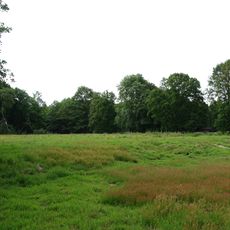
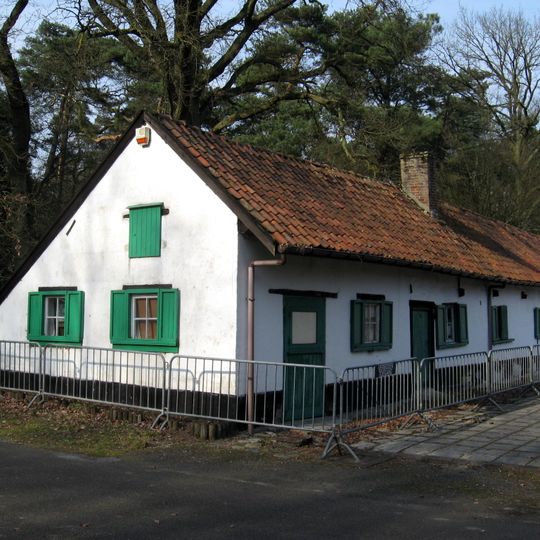
Kelchterhoef is a 200-hectare nature and recreation area with woodland, a chestnut avenue, and fens. Its white-painted, single-storey Abbey Farm has a steep tiled roof, a tall brick chimney, green shutters and door, and a grey metal fence along the facade. The site also includes De Plas, a former sand extraction pit up to 9 metres deep with a sandy beach.
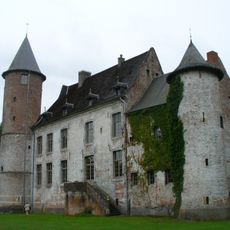
In 1228 Count Arnold IV of Loon gave Kelchterhoef to Floreffe Abbey, which already held neighbouring Hengelhoef. The monks farmed fields and bred fish in the heathland pools; from the 16th century tenants managed the estate. On 5 August 1798 it was sold as a 'zwart goed' for 105,000 French francs to Jean Abraham Mamin of Maastricht. In 1850 Charles Moreau de Bellaing acquired it and in 1851 rebuilt the abbey farm into today's U-shaped complex.
The name Kelchterhoef comes from Calechtre, the medieval name of the farm on this land. Three old farmhouses, Hoeve Mieneke, Hoeve Jan and the Abdijhoeve, now serve food and drink, and Hoeve Mieneke is named after Philomena Beertens. In May the dance festival Extrema Outdoor draws about 40,000 visitors to the grounds.
The area is freely accessible with parking available nearby and facilities for water sports such as kayaking and paddling. Routes are well-marked and suited to different fitness levels, allowing visitors to choose shorter or longer walks based on their preference.
The ponds in the park are old fish-rearing vennen, while the large swimming lake, De Plas, is a sand extraction pit dug during construction of the E314 motorway and reaches 9 metres deep. The castle farm was rebuilt in 1851 as a U-shaped complex after its west wing was demolished.
The community of curious travelers
AroundUs brings together thousands of curated places, local tips, and hidden gems, enriched daily by 94,442 contributors worldwide.