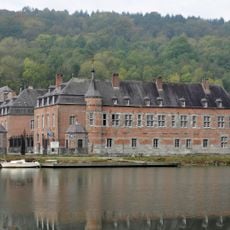
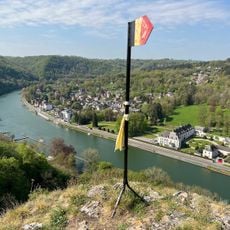
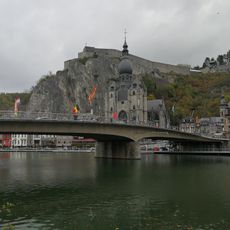
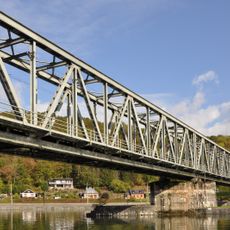
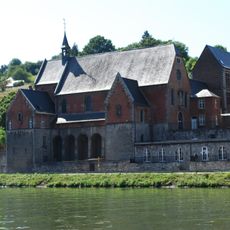
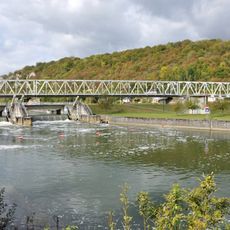
Naulette, Paleolithic cave in Dinant, Belgium
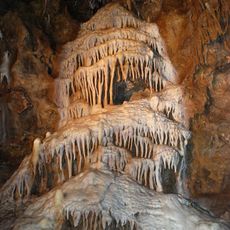
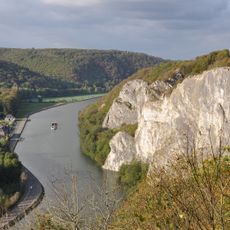
Naulette Cave sits on the left bank of the Lesse River about 25 meters above water level and extends roughly 30 meters into limestone formations. Its interior displays multiple meters of layered sediments, stalagmites, and bone deposits that document a long history of habitation.
A Belgian paleontologist discovered a Neanderthal mandible and incomplete arm bone in 1866 at this location. These finds rank among the earliest evidence of this human species in Western Europe during the Ice Age.
This shelter was a place where ancient peoples found refuge and left behind evidence of their lives. The layered deposits visible in the cave walls tell the story of how humans and animals lived in this landscape over thousands of years.
Access is through a tunnel from the 19th century that features wall niches for placing lamps during exploration. Visitors should be prepared for uneven ground and damp conditions inside the cave.
Excavations revealed animal bones that provide clues about the hunting practices and diet of earlier inhabitants. These remains show which animals roamed this region during the Ice Age and were hunted by people.
The community of curious travelers
AroundUs brings together thousands of curated places, local tips, and hidden gems, enriched daily by 92,539 contributors worldwide.